MSFS
Dornier Do X ↗
A vast inter-war flying boat with twelve engines arranged in six paired installations.
1 implementations+ Compare
Explore the aircraft. Find your simulator. Follow the sources.
A vast inter-war flying boat with twelve engines arranged in six paired installations.
A long-range fighter whose different engine and canopy developments produced several distinct forms.
The CJ4 belongs to Cessna's light-jet line, with two rear-mounted engines and a T-tail.
Piper's PA-31 utility twin, used in commuter, cargo and corporate transport.
A short-haul jet family that evolved through several generations of engines, wings and flight decks.
Mooney's four-seat piston family, developed through many touring-aircraft variants.
A box-shaped utility twin whose cabin and rear access are central to its design.
Cirrus's first type-certified aircraft, a composite piston single.
A carrier-capable multirole fighter, larger than the earlier Hornet from which it developed.
A compact Czech touring aircraft with side-by-side seats and a streamlined low-wing airframe.
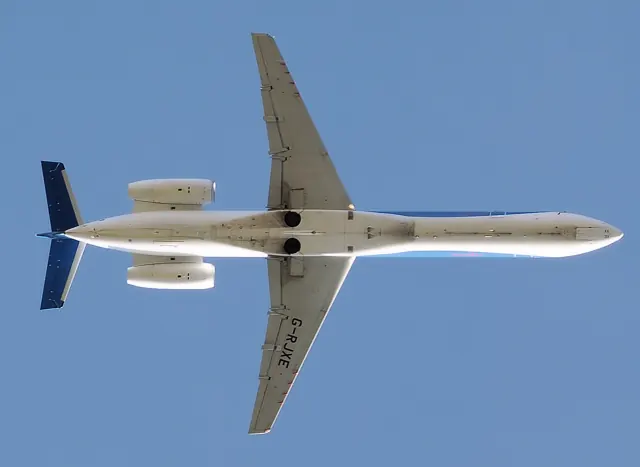
Embraer's regional-jet family, from the ERJ 135 to the longer ERJ 145.
A post-war Businessliner with a radial engine, cabin transport ambitions and tailwheel gear.
A narrow-body twin developed as a new generation of medium-range airliner.
A twin-radial airliner that helped make practical passenger transport a regular business.
The second-generation Harrier, designed around vectored thrust and short-field operation.
Airbus's first production aircraft, built around a twin-engine wide-body layout.
The Stationair utility family, combining a high wing with fixed landing gear.
A tandem two-seat sailplane designed for instruction and broader soaring use.
A pressurised twin turboprop with a canard, composite airframe and rear-facing propellers.
An Italian light aircraft known for military training and aerobatic use.
A Canadian tandem-seat trainer developed after the Second World War.
A DC-10-derived tanker that combined aerial refuelling with passenger and cargo transport.
A wooden touring-aircraft family recognisable by the upward-angled outer wing panels.
Two related Dutch regional jets developed from the F28 lineage.
This is AirframeDB’s first release. More features and aircraft research are planned. Leave your email if you’d like occasional updates.