MSFS
Aérospatiale Gazelle ↗
A compact utility helicopter distinguished by its enclosed Fenestron tail rotor.
1 implementations+ Compare
Explore the aircraft. Find your simulator. Follow the sources.
A compact utility helicopter distinguished by its enclosed Fenestron tail rotor.
Ted Smith's piston twin, later produced by Piper as the Aerostar.
A four-engine Airbus wide-body developed in parallel with the A330.
An enclosed-cabin development of the Bell 47, shaped for passenger and executive transport.
A compact twin-engine transport helicopter with retractable gear and a long development history.
Tecnam's two-seat, low-wing Sierra, introduced in the early 2000s.
A wooden touring-aircraft family recognisable by the upward-angled outer wing panels.
A long-running touring single, familiar in both V-tail and conventional-tail forms.
A radial-engined light transport whose long career covered passengers, freight and military training.
A two-seat composite kit aircraft developed from the Lancair 320.
A full-length double-deck airliner built for very high passenger capacity.
A modern utility single whose family includes both tailwheel and nosewheel configurations.
A wartime fighter developed from the earlier Curtiss P-36.
A push-pull twin with one engine at each end of the central fuselage.
SOCATA's touring-aircraft family, including the Tobago and Trinidad.
Dassault's long-range Falcon 8X, developed from the three-engine 7X.
Piper's two-seat trainer with fixed tricycle landing gear.
A British utility twin built around short regional and practical transport work.
A large long-haul twin that introduced Boeing's first commercial fly-by-wire airliner flight controls.
A tandem-seat jet trainer that also found a second life in civilian display and racing.
A compact rear-engined jet designed for short-haul regional airline work.
The Stationair utility family, combining a high wing with fixed landing gear.
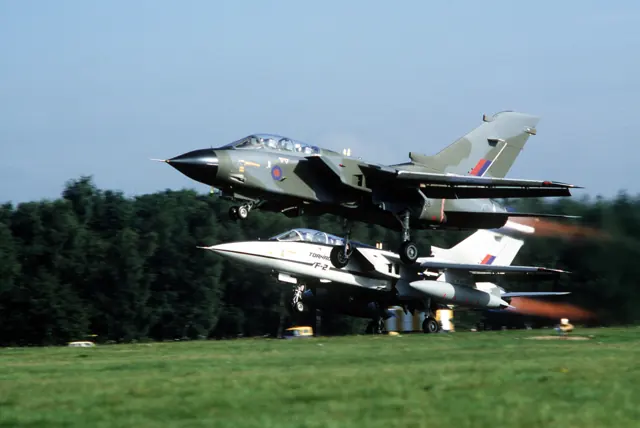
A European variable-sweep combat-aircraft family with distinct strike and interceptor versions.
A short-haul jet family that evolved through several generations of engines, wings and flight decks.
This is AirframeDB’s first release. More features and aircraft research are planned. Leave your email if you’d like occasional updates.