MSFS X-Plane
Cessna Caravan family ↗
A single-engine turboprop workhorse for passenger services, freight and remote-area transport.
4 implementations+ Compare
Explore the aircraft. Find your simulator. Follow the sources.
A single-engine turboprop workhorse for passenger services, freight and remote-area transport.
A modern composite twin with a roomy cabin and two wing-mounted piston engines.
Diamond's four-seat light twin, developed with diesel-powered versions.
A heavy-lift helicopter built around an open frame and an external working load.
The Stationair utility family, combining a high wing with fixed landing gear.
A purpose-built aerobatic monoplane family developed by pilot and designer Walter Extra.
A military liaison aircraft built around a high wing, tandem cabin and short-field utility work.
A close-air-support aircraft with a straight wing, twin tail and two widely separated jet engines.
A lightweight pusher family with an enclosed cabin and a high, braced wing.
A pressurised touring twin whose piston and turbine-conversion versions make a particularly interesting comparison.
A personal jet with one engine above the rear fuselage and a distinctive V-tail.
The Wilga is the real-aircraft starting point for Mike Patey's DRACO and the simulator's DRACO X.
A four-seat high-wing single that spans generations of conventional instruments and glass cockpits.
Piper's two-seat trainer with fixed tricycle landing gear.
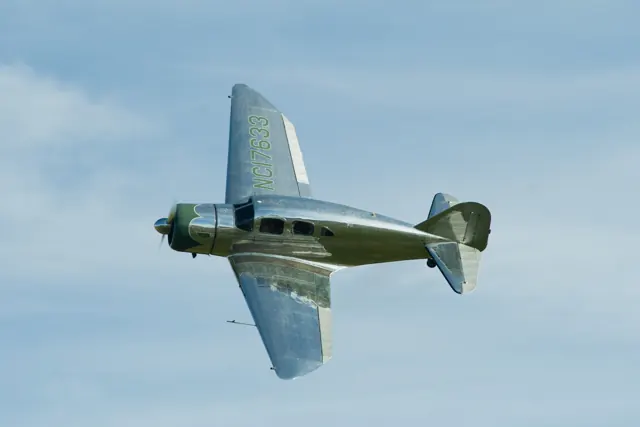
A late-1930s cabin aircraft with metal construction and retractable landing gear.
A twin-radial airliner that helped make practical passenger transport a regular business.
A composite touring single with a whole-aircraft parachute and several generations of avionics.
A long-range fighter whose different engine and canopy developments produced several distinct forms.
A compact twin-engine transport helicopter with retractable gear and a long development history.
A tandem-seat light aircraft with a streamlined low-wing layout.
A five-seat turbine helicopter developed from Robinson's smaller piston-helicopter line.
A modern medium twin-engine helicopter developed as a successor to the Dauphin line.
A rear-engined trijet built to bring jet service to shorter routes and smaller airports.
A small twin-engine amphibian that moved from business transport into military and utility service.
This is AirframeDB’s first release. More features and aircraft research are planned. Leave your email if you’d like occasional updates.