MSFS
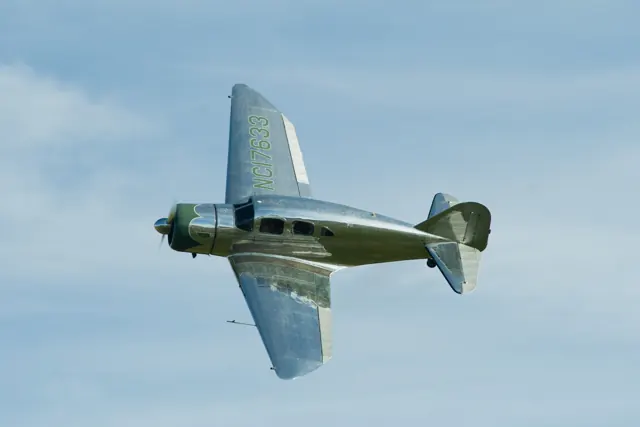
Spartan 7W Executive ↗
A late-1930s cabin aircraft with metal construction and retractable landing gear.
1 implementations+ Compare
Explore the aircraft. Find your simulator. Follow the sources.
A late-1930s cabin aircraft with metal construction and retractable landing gear.
Beechcraft's Model 76, designed to introduce pilots to twin-engine flying.
A single-seat competition sailplane offered in Standard and 18-metre configurations.
A twin-radial airliner that helped make practical passenger transport a regular business.
A lightweight short-field aircraft with a specialised wing and tall, shock-absorbing landing gear.
A light turbine helicopter whose land-based Scout and naval Wasp branches served different jobs.
The fixed-gear, six-cylinder touring branch of Piper's PA-28 family.
A light business jet with a swept wing, rear-mounted engines and an integrated flight deck.
The Wilga is the real-aircraft starting point for Mike Patey's DRACO and the simulator's DRACO X.
A heavy-lift helicopter built around an open frame and an external working load.
The second-generation Harrier, designed around vectored thrust and short-field operation.
A twin-engine business jet designed to retain some of the utility flexibility associated with the PC-12.
A side-by-side two-seat sailplane with a retractable powerplant for self-launching.
A twin-turboprop utility aircraft developed by Reims Aviation with Cessna.
A 1920s flying boat with two engines arranged in tandem above the wing.
A family of single-aisle airliners built around sidesticks, electronic flight controls and a shared cockpit.
A personal jet with one engine above the rear fuselage and a distinctive V-tail.
The Model 525 CitationJet, the starting point of Cessna's CJ and M2 lineage.
A four-engine tactical transport built around a rear loading ramp and access to austere airfields.
A vast inter-war flying boat with twelve engines arranged in six paired installations.
A four-engine jetliner that helped establish the shape of long-distance jet travel.
A compact aerobatic biplane family with both single-seat and tandem-seat branches.
An open, single-seat ultralight with its propeller behind the pilot.
A Swedish reconnaissance and dive-bombing aircraft from the early 1940s.
This is AirframeDB’s first release. More features and aircraft research are planned. Leave your email if you’d like occasional updates.


























