MSFS
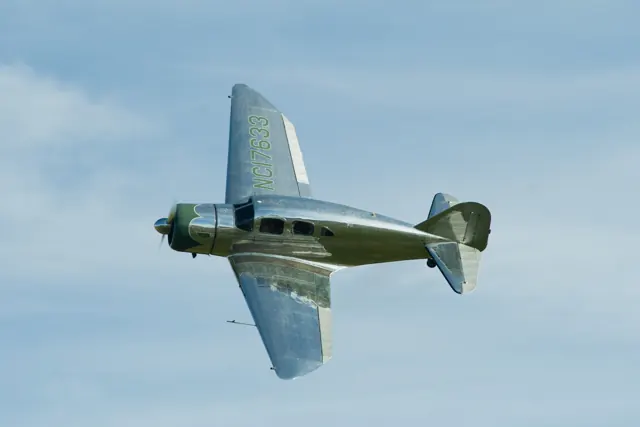
Ryan NYP “Spirit of St. Louis” ↗
The purpose-built Ryan monoplane used by Charles Lindbergh for his 1927 solo Atlantic crossing.
2 implementations+ Compare
Explore the aircraft. Find your simulator. Follow the sources.
The purpose-built Ryan monoplane used by Charles Lindbergh for his 1927 solo Atlantic crossing.
The H130 utility helicopter, descended from the AS350 and fitted with a Fenestron.
A long-range fighter whose different engine and canopy developments produced several distinct forms.
An open-cockpit biplane trainer that found a second life in civilian flying.
A single-seat aerobatic monoplane that also became a familiar air-racing aircraft.
A personal jet with one engine above the rear fuselage and a distinctive V-tail.
Beechcraft's Model 76, designed to introduce pilots to twin-engine flying.
A compact rear-engined jet designed for short-haul regional airline work.
A pioneering light helicopter whose bubble cabin and exposed structure became widely recognisable.
A twin-turboprop utility aircraft developed by Reims Aviation with Cessna.
A radial-engine trainer that also served in combat and civilian warbird roles.
Ted Smith's piston twin, later produced by Piper as the Aerostar.
A vast inter-war flying boat with twelve engines arranged in six paired installations.
A light turbine helicopter whose land-based Scout and naval Wasp branches served different jobs.
A wooden touring-aircraft family recognisable by the upward-angled outer wing panels.
A close-air-support aircraft with a straight wing, twin tail and two widely separated jet engines.
A late-1930s cabin aircraft with metal construction and retractable landing gear.
A single-engine turboprop workhorse for passenger services, freight and remote-area transport.
A twin-engine business jet designed to retain some of the utility flexibility associated with the PC-12.
A stretched development of the DC-9 with rear-mounted engines and a five-abreast cabin.
A full-length double-deck airliner built for very high passenger capacity.
An Italian light aircraft known for military training and aerobatic use.
The second-generation Harrier, designed around vectored thrust and short-field operation.
A low-wing agricultural Cessna with a cockpit and hopper arranged around the job.
This is AirframeDB’s first release. More features and aircraft research are planned. Leave your email if you’d like occasional updates.