MSFS
Aérospatiale Gazelle ↗
A compact utility helicopter distinguished by its enclosed Fenestron tail rotor.
1 implementations+ Compare
Explore the aircraft. Find your simulator. Follow the sources.
A compact utility helicopter distinguished by its enclosed Fenestron tail rotor.
Mooney's four-seat piston family, developed through many touring-aircraft variants.
A box-shaped utility twin whose cabin and rear access are central to its design.
A four-bladed utility helicopter developed from the LongRanger lineage.
A Swedish reconnaissance and dive-bombing aircraft from the early 1940s.
A shorter wide-body Airbus from the transition to two-pilot, electronic-instrument cockpits.
A four-engine airliner whose history also includes long-range maritime military service.
A wooden touring-aircraft family recognisable by the upward-angled outer wing panels.
A four-engine airliner that brought pressurised-cabin travel into scheduled service.
A hybrid-electric regional-airliner concept represented in the simulator while the real programme develops.
A four-seat composite touring and training aircraft developed from Diamond's smaller two-seater.
A heavy transport helicopter whose two large rotors remove the need for a tail rotor.
A twin-turbine Huey descendant with a four-blade main rotor.
A close-air-support aircraft with a straight wing, twin tail and two widely separated jet engines.
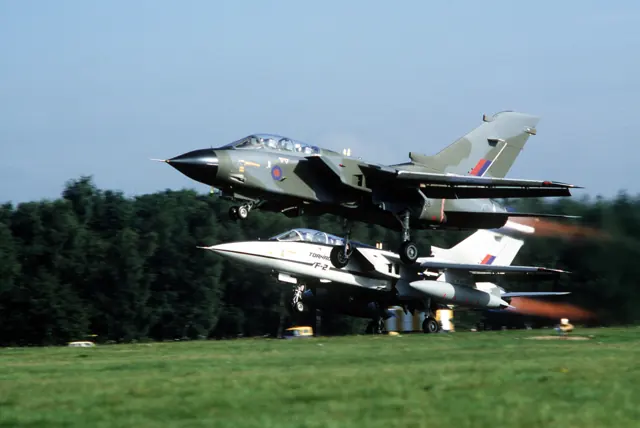
A European variable-sweep combat-aircraft family with distinct strike and interceptor versions.
A heavy-lift helicopter built around an open frame and an external working load.
An enlarged Velocity kit aircraft with a canard and rear-mounted pusher propeller.
Regional flying built around a high wing, two turboprops and short sectors.
A five-seat turbine helicopter developed from Robinson's smaller piston-helicopter line.
An amphibious turboprop designed around scooping water and delivering it to fires.
The fixed-gear, six-cylinder touring branch of Piper's PA-28 family.
A two-seat light amphibian with a compact boat hull and a pusher propeller.
The purpose-built Ryan monoplane used by Charles Lindbergh for his 1927 solo Atlantic crossing.
A twin-engine utility helicopter with roots in the BK 117 and EC145 families.
This is AirframeDB’s first release. More features and aircraft research are planned. Leave your email if you’d like occasional updates.