X-Plane
Boeing-Stearman Model 75 ↗
An open-cockpit biplane trainer that found a second life in civilian flying.
1 implementations+ Compare
Explore the aircraft. Find your simulator. Follow the sources.
An open-cockpit biplane trainer that found a second life in civilian flying.
A single-engine turboprop workhorse for passenger services, freight and remote-area transport.
A small three-engine demonstrator created to explore technologies for a future supersonic airliner.
An amphibious turboprop designed around scooping water and delivering it to fires.
A large long-haul twin that introduced Boeing's first commercial fly-by-wire airliner flight controls.
A compact Japanese twin turboprop with a high wing and pressurised cabin.
The H130 utility helicopter, descended from the AS350 and fitted with a Fenestron.
A composite, low-wing touring single with fixed gear and a turbocharged engine.
The Mitchell medium bomber, named for aviation advocate Billy Mitchell.
The four-engine Flying Fortress, a major American bomber of the Second World War.
An unpowered military cargo glider designed to deliver troops and equipment behind a tow aircraft.
A two-seat training single with a high wing and fixed tricycle landing gear.
A stretched development of the DC-9 with rear-mounted engines and a five-abreast cabin.
A tandem two-seat sailplane designed for instruction and broader soaring use.
Piper's two-seat trainer with fixed tricycle landing gear.
A hybrid-electric regional-airliner concept represented in the simulator while the real programme develops.
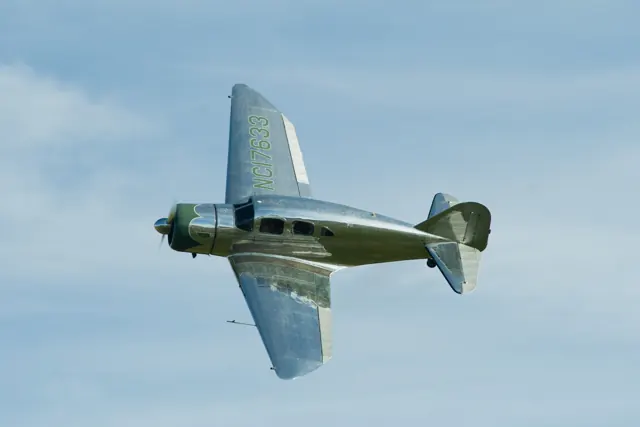
A late-1930s cabin aircraft with metal construction and retractable landing gear.
A Polish utility aircraft designed for short takeoffs and landings.
A radial-engine trainer that also served in combat and civilian warbird roles.
A tandem-seat utility aircraft whose light structure and high wing suit bush, towing and recreational work.
A twin-turboprop utility aircraft developed by Reims Aviation with Cessna.
The Model 525 CitationJet, the starting point of Cessna's CJ and M2 lineage.
The purpose-built Ryan monoplane used by Charles Lindbergh for his 1927 solo Atlantic crossing.
A long-range trijet developed from the DC-10 with a stretched fuselage and revised wing and cockpit.
This is AirframeDB’s first release. More features and aircraft research are planned. Leave your email if you’d like occasional updates.