MSFS
Lockheed T-33 Shooting Star ↗
Lockheed's tandem-seat Shooting Star jet trainer.
1 implementations+ Compare
Explore the aircraft. Find your simulator. Follow the sources.
Lockheed's tandem-seat Shooting Star jet trainer.
The second-generation Harrier, designed around vectored thrust and short-field operation.
A shorter wide-body Airbus from the transition to two-pilot, electronic-instrument cockpits.
A light business jet with a swept wing, rear-mounted engines and an integrated flight deck.
A midsize business jet developed by Bombardier’s Learjet division.
A 1920s flying boat with two engines arranged in tandem above the wing.
A composite amphibian that carries Dornier's centreline engine arrangement into the turboprop era.
A wide-cabin business-jet family that developed from Canadair's original Challenger programme.
A tandem two-seat sailplane designed for instruction and broader soaring use.
A stretched development of the DC-9 with rear-mounted engines and a five-abreast cabin.
A hybrid-electric regional-airliner concept represented in the simulator while the real programme develops.
A Canadian tandem-seat trainer developed after the Second World War.
A two-seat composite trainer with a low wing and a large canopy.
A pressurised four-engine piston transport from the last major generation before the jet airliner.
Beechcraft's Model 76, designed to introduce pilots to twin-engine flying.
Diamond's four-seat light twin, developed with diesel-powered versions.
A side-by-side two-seat sailplane with a retractable powerplant for self-launching.
A six-seat composite single turboprop with a pressurised cabin and retractable gear.
The Huey: a turbine-powered utility helicopter with a broad cabin and an unmistakable two-bladed rotor.
A super-midsize business jet with a swept wing, rear-mounted engines and an integrated glass cockpit.
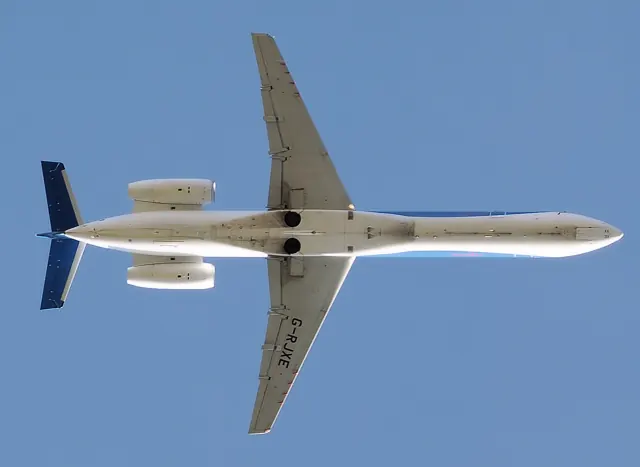
Embraer's regional-jet family, from the ERJ 135 to the longer ERJ 145.
A very light twin jet developed from the Eclipse 500.
An advanced trainer known around the world as the Texan, Harvard and SNJ.
A long-running touring single, familiar in both V-tail and conventional-tail forms.
This is AirframeDB’s first release. More features and aircraft research are planned. Leave your email if you’d like occasional updates.