MSFS
Airbus Helicopter H225 ↗
A large twin-engine helicopter from the Super Puma line, used for offshore and public-service work.
1 implementations+ Compare
Explore the aircraft. Find your simulator. Follow the sources.
A large twin-engine helicopter from the Super Puma line, used for offshore and public-service work.
An enclosed-cabin development of the Bell 47, shaped for passenger and executive transport.
A full-length double-deck airliner built for very high passenger capacity.
A rear-engined trijet built to bring jet service to shorter routes and smaller airports.
A small twin-engine amphibian that moved from business transport into military and utility service.
A corrugated-metal, three-engine transport from the formative years of airline travel.
A two-seat, twin-engine fighter that served naval and land-based air forces in many roles.
A composite, low-wing touring single with fixed gear and a turbocharged engine.
A two-seat training single with a high wing and fixed tricycle landing gear.
The Wilga is the real-aircraft starting point for Mike Patey's DRACO and the simulator's DRACO X.
A tandem-seat homebuilt jet with composite construction and retractable landing gear.
A stretched development of the DC-9 with rear-mounted engines and a five-abreast cabin.
A British jet trainer with tandem seating and a long military training career.
The second-generation Harrier, designed around vectored thrust and short-field operation.
A Canadian tandem-seat trainer developed after the Second World War.
A modern composite twin with a roomy cabin and two wing-mounted piston engines.
A long-running touring single, familiar in both V-tail and conventional-tail forms.
A two-seat Tecnam high-wing aircraft combining composite and metal construction.
A low-wing agricultural Cessna with a cockpit and hopper arranged around the job.
A low-wing piston twin that carries the Beechcraft touring-aircraft lineage into two-engine flying.
A shorter wide-body Airbus from the transition to two-pilot, electronic-instrument cockpits.
A personal jet with one engine above the rear fuselage and a distinctive V-tail.
A huge wooden flying-boat prototype that made one brief flight in 1947.
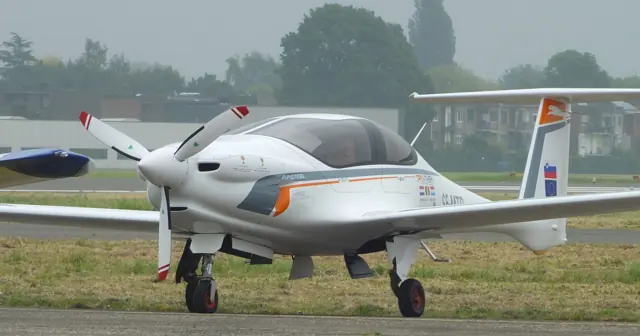
Pipistrel's streamlined four-seat composite-aircraft design.
This is AirframeDB’s first release. More features and aircraft research are planned. Leave your email if you’d like occasional updates.