MSFS
Cessna Citation Longitude ↗
A super-midsize business jet with a swept wing, rear-mounted engines and an integrated glass cockpit.
2 implementations+ Compare
Explore the aircraft. Find your simulator. Follow the sources.
A super-midsize business jet with a swept wing, rear-mounted engines and an integrated glass cockpit.
A two-seat light aircraft with folding wings and a choice of nosewheel or tailwheel gear.
The second-generation Harrier, designed around vectored thrust and short-field operation.
A two-seat naval fighter with variable-sweep wings and a cockpit built around pilot and radar-intercept officer roles.
A post-war Czech light twin with a rounded cabin and engines carried on a low wing.
A four-seat composite touring and training aircraft developed from Diamond's smaller two-seater.
An enclosed-cabin development of the Bell 47, shaped for passenger and executive transport.
A military transport developed from the DC-3, used for cargo, troops, parachuting and glider towing.
A tandem-seat jet trainer that also found a second life in civilian display and racing.
Beechcraft's Model 76, designed to introduce pilots to twin-engine flying.
A very large single-engine biplane designed for practical work from modest airfields.
The Model 525 CitationJet, the starting point of Cessna's CJ and M2 lineage.
Piper's PA-31 utility twin, used in commuter, cargo and corporate transport.
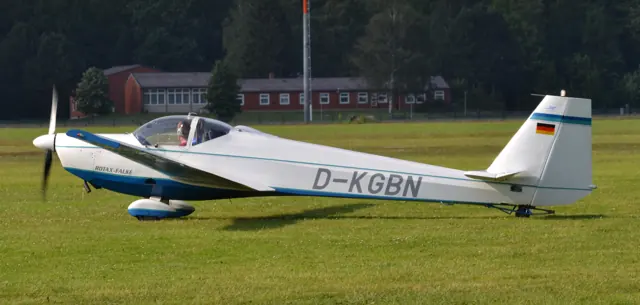
A side-by-side two-seat sailplane with a retractable powerplant for self-launching.
A compact racing aeroplane built around a large radial engine and very short fuselage.
A pressurised single-engine turboprop family that combines a compact cabin with retractable gear.
A light turbine helicopter whose land-based Scout and naval Wasp branches served different jobs.
A long-range twin designed around a new wide-body airframe and extensive composite construction.
A four-engine airliner whose history also includes long-range maritime military service.
A side-by-side touring motorglider used for both powered flying and soaring.
A pressurised touring twin whose piston and turbine-conversion versions make a particularly interesting comparison.
A tandem-seat light aircraft with a streamlined low-wing layout.
A four-engine Airbus wide-body developed in parallel with the A330.
A small observation-helicopter family with a rounded cabin and compact rotor system.
New aircraft, useful sources and improvements to AirframeDB. Occasional updates, when there’s something to share.