MSFS X-Plane
Airbus A350 ↗
A long-range twin designed around a new wide-body airframe and extensive composite construction.
2 implementations+ Compare
Explore the aircraft. Find your simulator. Follow the sources.
A long-range twin designed around a new wide-body airframe and extensive composite construction.
Mooney's four-seat piston family, developed through many touring-aircraft variants.
A 1920s flying boat with two engines arranged in tandem above the wing.
The four-engine wide-body whose raised flight deck created one of aviation's most recognisable profiles.
SOCATA's touring-aircraft family, including the Tobago and Trinidad.
The purpose-built Ryan monoplane used by Charles Lindbergh for his 1927 solo Atlantic crossing.
A midsize business jet developed by Bombardier’s Learjet division.
A four-seat high-wing single that spans generations of conventional instruments and glass cockpits.
A five-seat turbine helicopter developed from Robinson's smaller piston-helicopter line.
A four-seat touring family whose Commander 114 added a larger engine and further refinements.
A compact utility helicopter distinguished by its enclosed Fenestron tail rotor.
A single-seat aerobatic monoplane that also became a familiar air-racing aircraft.
The Wilga is the real-aircraft starting point for Mike Patey's DRACO and the simulator's DRACO X.
A wide-cabin business-jet family that developed from Canadair's original Challenger programme.
The Model 525 CitationJet, the starting point of Cessna's CJ and M2 lineage.
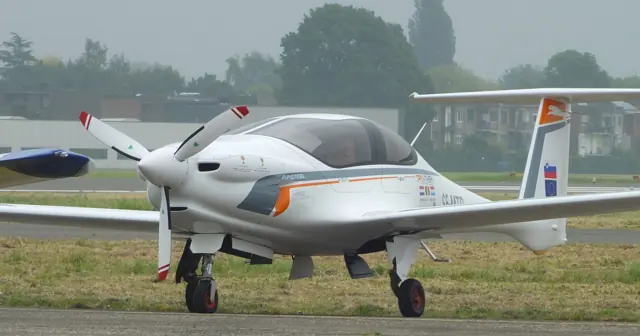
Pipistrel's streamlined four-seat composite-aircraft design.
A two-seat composite trainer with a low wing and a large canopy.
A small three-engine demonstrator created to explore technologies for a future supersonic airliner.
A high-wing twin turboprop developed for regional freight and passenger transport.
A tandem-seat utility aircraft whose light structure and high wing suit bush, towing and recreational work.
A tandem-seat jet trainer that also found a second life in civilian display and racing.
A twin-turboprop family whose smaller conventional-tail and larger T-tail branches have distinct identities.
The Mitchell medium bomber, named for aviation advocate Billy Mitchell.
A carrier-capable multirole fighter, larger than the earlier Hornet from which it developed.
This is AirframeDB’s first release. More features and aircraft research are planned. Leave your email if you’d like occasional updates.