X-Plane
Boeing 767 ↗
A twin-aisle Boeing designed alongside the 757's generation of two-pilot flight decks.
1 implementations+ Compare
Explore the aircraft. Find your simulator. Follow the sources.
A twin-aisle Boeing designed alongside the 757's generation of two-pilot flight decks.
The second-generation Harrier, designed around vectored thrust and short-field operation.
A four-seat composite touring and training aircraft developed from Diamond's smaller two-seater.
The Huey: a turbine-powered utility helicopter with a broad cabin and an unmistakable two-bladed rotor.
A push-pull twin with one engine at each end of the central fuselage.
A stretched development of the DC-9 with rear-mounted engines and a five-abreast cabin.
A large long-haul twin that introduced Boeing's first commercial fly-by-wire airliner flight controls.
A wooden touring-aircraft family recognisable by the upward-angled outer wing panels.
A single-seat aerobatic monoplane that also became a familiar air-racing aircraft.
A Canadian tandem-seat trainer developed after the Second World War.
A jet-powered military transport designed for both strategic loads and tactical airfield access.
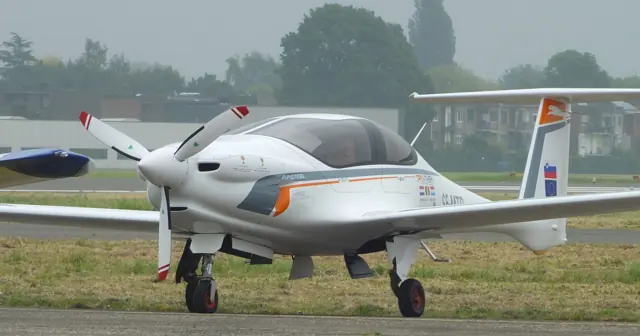
Pipistrel's streamlined four-seat composite-aircraft design.
A pioneering all-metal transport with an enclosed passenger cabin and corrugated skin.
Epic's experimental light-jet project, represented in simulation by Aerobask.
A post-war Businessliner with a radial engine, cabin transport ambitions and tailwheel gear.
A twin-turboprop regional airliner developed through Swedish and American industrial cooperation.
A compact racing aeroplane built around a large radial engine and very short fuselage.
A two-seat naval fighter with variable-sweep wings and a cockpit built around pilot and radar-intercept officer roles.
A long-range trijet developed from the DC-10 with a stretched fuselage and revised wing and cockpit.
A British jet trainer with tandem seating and a long military training career.
A long-running touring single, familiar in both V-tail and conventional-tail forms.
A pressurised touring twin whose piston and turbine-conversion versions make a particularly interesting comparison.
A light turbine helicopter whose land-based Scout and naval Wasp branches served different jobs.
A wide-cabin business-jet family that developed from Canadair's original Challenger programme.
This is AirframeDB’s first release. More features and aircraft research are planned. Leave your email if you’d like occasional updates.