X-Plane
Lockheed SR-71 ↗
A specialised reconnaissance aircraft designed for very high altitude and sustained supersonic flight.
1 implementations+ Compare
Explore the aircraft. Find your simulator. Follow the sources.
A specialised reconnaissance aircraft designed for very high altitude and sustained supersonic flight.
A cabin-class piston twin designed for commuter, cargo and utility work.
The Stationair utility family, combining a high wing with fixed landing gear.
A twin-turboprop utility aircraft developed by Reims Aviation with Cessna.
Lockheed's tandem-seat Shooting Star jet trainer.
A four-abreast regional-jet family spanning the E170, E175, E190 and E195.
A narrow-body twin developed as a new generation of medium-range airliner.
An enlarged Velocity kit aircraft with a canard and rear-mounted pusher propeller.
An unpowered military cargo glider designed to deliver troops and equipment behind a tow aircraft.
Tecnam's two-seat, low-wing Sierra, introduced in the early 2000s.
An open-cockpit biplane trainer that found a second life in civilian flying.
A Polish utility aircraft designed for short takeoffs and landings.
A turbine-powered utility helicopter with a broad cabin and a long international service history.
A very large single-engine biplane designed for practical work from modest airfields.
A British jet trainer with tandem seating and a long military training career.
A six-seat composite single turboprop with a pressurised cabin and retractable gear.
A single-engine turboprop workhorse for passenger services, freight and remote-area transport.
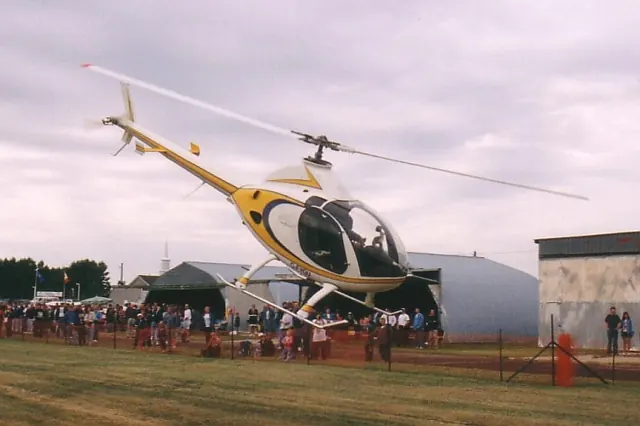
RotorWay's two-seat kit-helicopter family, with piston and turbine simulator interpretations.
A carbon-fibre aerobatic monoplane family with a dedicated air-racing branch.
A rear-engined trijet built to bring jet service to shorter routes and smaller airports.
A twin-engine business jet designed to retain some of the utility flexibility associated with the PC-12.
The JetRanger and LongRanger family: a familiar turbine-helicopter shape with distinct cabin lengths.
Lockheed's wide-body TriStar, with three RB211 engines and a distinctive tail intake.
The CJ4 belongs to Cessna's light-jet line, with two rear-mounted engines and a T-tail.
This is AirframeDB’s first release. More features and aircraft research are planned. Leave your email if you’d like occasional updates.