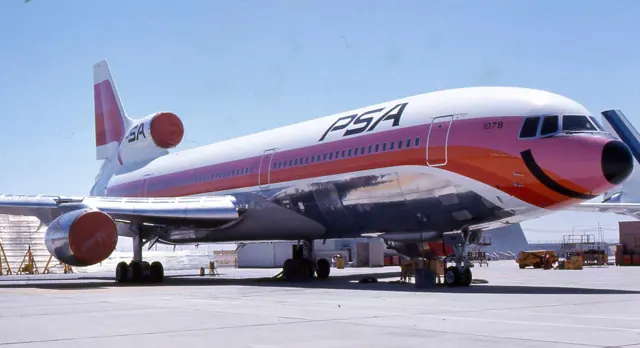
Find aircraft background, systems descriptions and manuals for the aircraft you are researching. Each note keeps its source and version context close by.
Simulator manuals describe the developer’s implementation. Aircraft background is research-based; pilot accounts describe an individual’s experience. Coverage here is limited to the selected notes and linked resources, not the full contents of every manual.
Lockheed F-104 Starfighter
The Starfighter began development in 1952, and the XF-104 first flew in 1954. The U.S. Air Force museum describes its air-superiority origin and its use as tactical fighter and interceptor. Speed, altitude and time-to-climb records became part of the programme’s early public story, while international production carried the design into many different national configurations.
USAF museum history · Prototype · F104FXP package · USAF Museum F-104C reference; G and TF-104 configurations differ
F-117 Nighthawk · Aerial Simulations · MSFS 2020
Pitch commands and Mach hold
The 2023 MSFS 2020 guide describes +6G and -2G commands at full aft and forward stick. Mach hold changes pitch to maintain Mach; altitude, heading and destination/navigation hold are also documented.
Version 1.2 · printed pages 8 and 13–14 (PDF pages 9 and 14–15)
F-117 Nighthawk · Aerial Simulations · MSFS 2024
Separate MSFS 2024 edition
The MSFS 2024 listing documents a radar-cross-section monitor, custom Mach hold and drag-chute simulation. The older MSFS 2020 guide has its own version and scope.
MSFS 2024 product · key features and compatibility
Lockheed F-117A Nighthawk
Lockheed developed the F-117A to attack high-value targets while reducing radar detection. Its low-observable design was the basis of the first operational stealth aircraft. A single pilot operates the aircraft, powered by two General Electric F404-F1D2 engines.
Lockheed F-117A Nighthawk · USAF Museum F-117A reference
Lockheed JetStar
The JetStar entered commercial service in 1961 after a development programme that began in the 1950s. Big Radials recounts the change from an intended two-engine installation to four Pratt & Whitney JT12 engines, producing the distinctive paired nacelles on either side of the rear fuselage. The cabin and early jet-transport cockpit belong to the first generation of purpose-built business jets.
Manual history · NASA base-aircraft description · NASA JetStar description
TriStar Airliner · iniBuilds · MSFS 2024
The virtual engineer can complete a flow or one system
In the Paper Flight Bag, AUTOCOMPLETE finishes the full flow; COMPLETE configures only the selected system. Expanded lists show red or green setup status.
iniBuilds MSFS 2024 manual v1.0 · 23 March 2026, PDF p.15
TriStar Airliner · iniBuilds · MSFS 2024
Throttle calibration starts with the right axis assignment
Select the number of throttle axes in the PFB calibration page. The manual warns against MSFS throttle assignments labelled “(0 to 100%)”.
Manual v1.0, PDF p.18; controller setup described by the developer
TriStar Airliner · iniBuilds · MSFS 2024
Parking-brake behaviour is selectable
Realistic mode requires brake pressure before engaging the lever and pedal pressure to release. With that option disabled, the lever toggles the brake directly.
Manual v1.0, PDF p.17
TriStar Airliner · iniBuilds · MSFS 2024
INS preparation can be shortened
Alignment offers instant, five-minute and seventeen-minute settings. The flight-plan page also provides SEND TO INS for transferring the imported plan.
Manual v1.0, PDF pp.17 and 22
TriStar Airliner · iniBuilds · MSFS 2024
The loadsheet separates people, cargo and fuel
The PFB loadsheet accepts SimBrief weights and provides passenger, cargo-compartment and individual fuel-tank loading controls.
Manual v1.0, PDF p.21
TriStar Airliner · iniBuilds · MSFS 2024
Checklist depth is a user choice
Standard checklists cover essential operation while omitting system tests. Expert checklists retain the more complete checks.
Manual v1.0, PDF p.6
TriStar Airliner · iniBuilds · MSFS 2024
DLC couples pitch input with spoiler movement
Beyond 30° flap-lever position, DLC changes spoiler position with pitch input: nose-down extends them and nose-up retracts them, controlling sink rate with limited pitch change.
Manual v1.0, PDF p.67; developer-documented simulator behaviour