X-Plane
Epic Victory ↗
Epic's experimental light-jet project, represented in simulation by Aerobask.
1 implementations+ Compare
Explore the aircraft. Find your simulator. Follow the sources.
Epic's experimental light-jet project, represented in simulation by Aerobask.
SOCATA's touring-aircraft family, including the Tobago and Trinidad.
A military liaison aircraft built around a high wing, tandem cabin and short-field utility work.
A modern composite twin with a roomy cabin and two wing-mounted piston engines.
A twin-turbine Huey descendant with a four-blade main rotor.
A very light twin jet developed from the Eclipse 500.
The four-engine Flying Fortress, a major American bomber of the Second World War.
A four-seat, pressurised kit aircraft with a composite airframe and retractable landing gear.
A DC-10-derived tanker that combined aerial refuelling with passenger and cargo transport.
A radial-engine trainer that also served in combat and civilian warbird roles.
A four-abreast regional-jet family spanning the E170, E175, E190 and E195.
The second-generation Harrier, designed around vectored thrust and short-field operation.
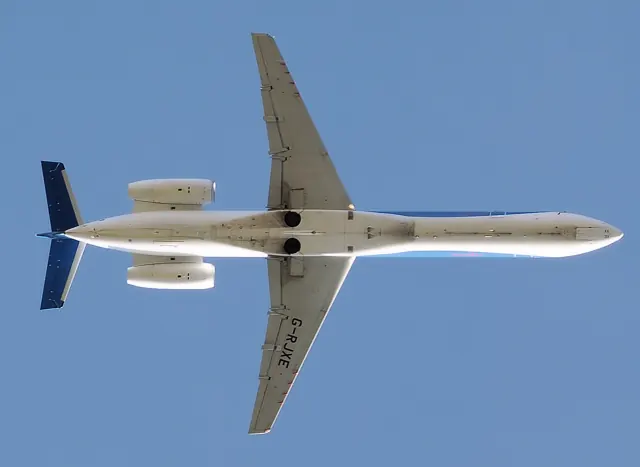
Embraer's regional-jet family, from the ERJ 135 to the longer ERJ 145.
A four-seat kit-built touring aircraft that expanded the RV family beyond two-seat designs.
Beechcraft's Model 76, designed to introduce pilots to twin-engine flying.
A six-seat composite single turboprop with a pressurised cabin and retractable gear.
A three-engine airliner that became a mainstay of Soviet and Russian passenger transport.
A low-wing piston family that spans simple trainers, touring aircraft and retractable-gear Arrows.
A heavy transport helicopter whose two large rotors remove the need for a tail rotor.
Piper's two-seat trainer with fixed tricycle landing gear.
A two-seat, twin-engine fighter that served naval and land-based air forces in many roles.
A swept-wing business jet designed around high subsonic cruise speed.
A short-haul jet family that evolved through several generations of engines, wings and flight decks.
A push-pull twin with one engine at each end of the central fuselage.
This is AirframeDB’s first release. More features and aircraft research are planned. Leave your email if you’d like occasional updates.