MSFS X-Plane
Robin DR400/100 Cadet ↗
A wooden touring-aircraft family recognisable by the upward-angled outer wing panels.
5 implementations+ Compare
Explore the aircraft. Find your simulator. Follow the sources.
A wooden touring-aircraft family recognisable by the upward-angled outer wing panels.
A light turbine helicopter whose land-based Scout and naval Wasp branches served different jobs.
A stretched development of the DC-9 with rear-mounted engines and a five-abreast cabin.
A side-by-side two-seat sailplane with a retractable powerplant for self-launching.
A two-seat training single with a high wing and fixed tricycle landing gear.
The fixed-gear, six-cylinder touring branch of Piper's PA-28 family.
A twin-turbine Huey descendant with a four-blade main rotor.
Cirrus's first type-certified aircraft, a composite piston single.
A British jet trainer with tandem seating and a long military training career.
A Polish utility aircraft designed for short takeoffs and landings.
The four-engine Flying Fortress, a major American bomber of the Second World War.
A compact Italian light twin with a shoulder wing and metal airframe.
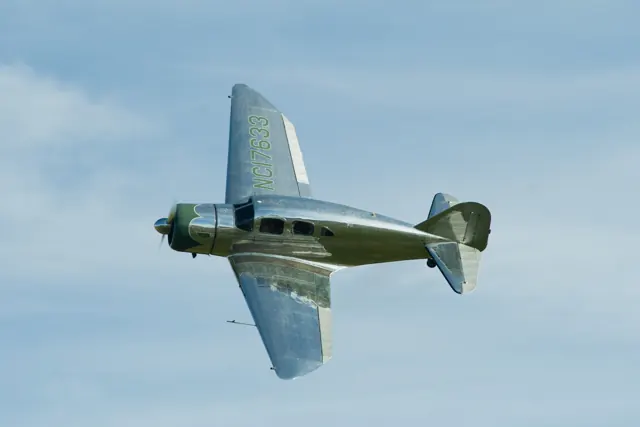
A late-1930s cabin aircraft with metal construction and retractable landing gear.
A close-air-support aircraft with a straight wing, twin tail and two widely separated jet engines.
A composite, low-wing touring single with fixed gear and a turbocharged engine.
A fixed-wing observation aircraft with a helicopter-like view from its glazed nose.
A wartime fighter developed from the earlier Curtiss P-36.
An open-cockpit biplane trainer that found a second life in civilian flying.
A corrugated-metal transport best known in its three-engine form.
A twin-engine utility helicopter with roots in the BK 117 and EC145 families.
A compact two-seat light aircraft with a high wing and a wide range of development variants.
A long-haul twin whose family spans passenger, freight and specialist transport roles.
A Brazilian light trainer with a high wing, tandem seats and a simple utility layout.
A long-running touring single, familiar in both V-tail and conventional-tail forms.
This is AirframeDB’s first release. More features and aircraft research are planned. Leave your email if you’d like occasional updates.