MSFS
Dornier Seastar ↗
A composite amphibian that carries Dornier's centreline engine arrangement into the turboprop era.
1 implementations+ Compare
Explore the aircraft. Find your simulator. Follow the sources.
A composite amphibian that carries Dornier's centreline engine arrangement into the turboprop era.
A shorter wide-body Airbus from the transition to two-pilot, electronic-instrument cockpits.
The purpose-built Ryan monoplane used by Charles Lindbergh for his 1927 solo Atlantic crossing.
A family of single-aisle airliners built around sidesticks, electronic flight controls and a shared cockpit.
A small three-engine demonstrator created to explore technologies for a future supersonic airliner.
Ted Smith's piston twin, later produced by Piper as the Aerostar.
A twin-engine utility helicopter with roots in the BK 117 and EC145 families.
A wide-cabin business-jet family that developed from Canadair's original Challenger programme.
A six-engine flying boat created for long-distance passenger travel over water.
A lightweight short-field aircraft with a specialised wing and tall, shock-absorbing landing gear.
An unpowered military cargo glider designed to deliver troops and equipment behind a tow aircraft.
The four-engine wide-body whose raised flight deck created one of aviation's most recognisable profiles.
A turbine-powered utility helicopter with a broad cabin and a long international service history.
A stretched development of the DC-9 with rear-mounted engines and a five-abreast cabin.
A purpose-built agricultural aircraft that also became a single-engine air tanker.
A vast inter-war flying boat with twelve engines arranged in six paired installations.
An enlarged Velocity kit aircraft with a canard and rear-mounted pusher propeller.
A tandem-seat jet trainer that also found a second life in civilian display and racing.
A compact racing aeroplane built around a large radial engine and very short fuselage.
A twin-hull flying boat with its engines mounted together above the wing.
A huge wooden flying-boat prototype that made one brief flight in 1947.
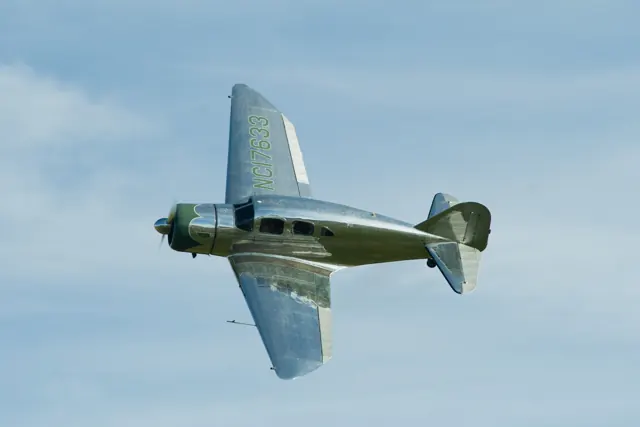
A late-1930s cabin aircraft with metal construction and retractable landing gear.
An open-cockpit biplane trainer that found a second life in civilian flying.
A push-pull twin with one engine at each end of the central fuselage.
This is AirframeDB’s first release. More features and aircraft research are planned. Leave your email if you’d like occasional updates.