MSFS X-Plane
Boeing 737 family ↗
A short-haul jet family that evolved through several generations of engines, wings and flight decks.
7 implementations+ Compare
Explore the aircraft. Find your simulator. Follow the sources.
A short-haul jet family that evolved through several generations of engines, wings and flight decks.
A radial-engined light transport whose long career covered passengers, freight and military training.
The CJ4 belongs to Cessna's light-jet line, with two rear-mounted engines and a T-tail.
A compact utility helicopter distinguished by its enclosed Fenestron tail rotor.
A huge wooden flying-boat prototype that made one brief flight in 1947.
An enlarged Velocity kit aircraft with a canard and rear-mounted pusher propeller.
A small twin-engine amphibian that moved from business transport into military and utility service.
The Mitchell medium bomber, named for aviation advocate Billy Mitchell.
A twin-engine utility helicopter with roots in the BK 117 and EC145 families.
A short-field Savage with leading-edge slats and a distinct Got Friends simulator implementation.
A French two-seat aerobatic trainer with side-by-side seating and a distinctive curved wing outline.
A three-engine airliner that became a mainstay of Soviet and Russian passenger transport.
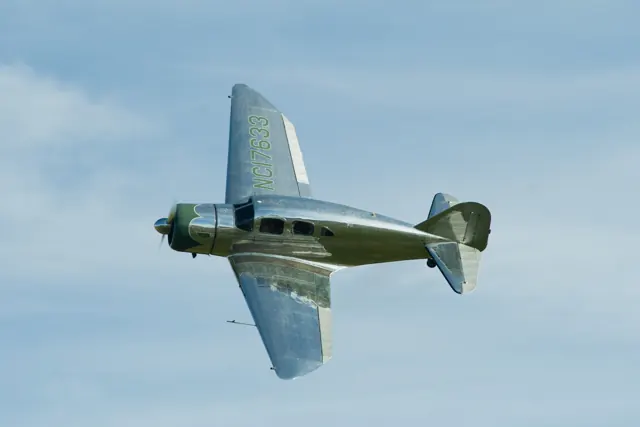
A late-1930s cabin aircraft with metal construction and retractable landing gear.
The Huey: a turbine-powered utility helicopter with a broad cabin and an unmistakable two-bladed rotor.
A side-by-side two-seat sailplane with a retractable powerplant for self-launching.
A family of single-aisle airliners built around sidesticks, electronic flight controls and a shared cockpit.
A composite amphibian that carries Dornier's centreline engine arrangement into the turboprop era.
A radial-engined utility aircraft closely associated with bush flying and float operations.
The JetRanger and LongRanger family: a familiar turbine-helicopter shape with distinct cabin lengths.
A pioneering light helicopter whose bubble cabin and exposed structure became widely recognisable.
A Swedish reconnaissance and dive-bombing aircraft from the early 1940s.
A compact Italian light twin with a shoulder wing and metal airframe.
A two-seat naval fighter with variable-sweep wings and a cockpit built around pilot and radar-intercept officer roles.
A stretched development of the DC-9 with rear-mounted engines and a five-abreast cabin.
This is AirframeDB’s first release. More features and aircraft research are planned. Leave your email if you’d like occasional updates.