MSFS
Bell UH-1 Huey ↗
The Huey: a turbine-powered utility helicopter with a broad cabin and an unmistakable two-bladed rotor.
2 implementations+ Compare
Explore the aircraft. Find your simulator. Follow the sources.
The Huey: a turbine-powered utility helicopter with a broad cabin and an unmistakable two-bladed rotor.
A four-engine jetliner that helped establish the shape of long-distance jet travel.
A narrow-body twin developed as a new generation of medium-range airliner.
A post-war Czech light twin with a rounded cabin and engines carried on a low wing.
A tandem-seat jet trainer that also found a second life in civilian display and racing.
A two-seat composite trainer with a low wing and a large canopy.
A very light twin jet developed from the Eclipse 500.
A long-range strategic bomber with a swept wing and eight jet engines in paired pods.
A high-wing utility aircraft known for short-field work and a broad choice of working configurations.
A four-engine tactical transport built around a rear loading ramp and access to austere airfields.
A long-range twin designed around a new wide-body airframe and extensive composite construction.
The Model 525 CitationJet, the starting point of Cessna's CJ and M2 lineage.
A box-shaped utility twin whose cabin and rear access are central to its design.
A four-engine airliner that brought pressurised-cabin travel into scheduled service.
A modern composite twin with a roomy cabin and two wing-mounted piston engines.
A single-engine turboprop workhorse for passenger services, freight and remote-area transport.
A four-engine Airbus wide-body developed in parallel with the A330.
A fixed-wing observation aircraft with a helicopter-like view from its glazed nose.
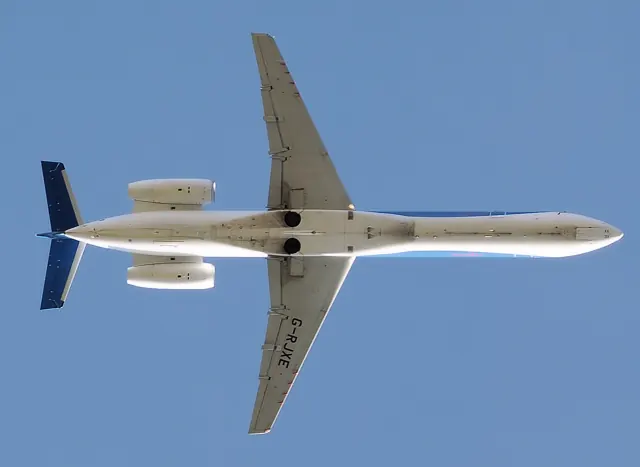
Embraer's regional-jet family, from the ERJ 135 to the longer ERJ 145.
A 1920s flying boat with two engines arranged in tandem above the wing.
A single-seat aerobatic monoplane that also became a familiar air-racing aircraft.
A purpose-built aerobatic monoplane family developed by pilot and designer Walter Extra.
A wooden touring-aircraft family recognisable by the upward-angled outer wing panels.
This is AirframeDB’s first release. More features and aircraft research are planned. Leave your email if you’d like occasional updates.