MSFS X-Plane
North American P-51 Mustang ↗
A long-range fighter whose different engine and canopy developments produced several distinct forms.
2 implementations+ Compare
Explore the aircraft. Find your simulator. Follow the sources.
A long-range fighter whose different engine and canopy developments produced several distinct forms.
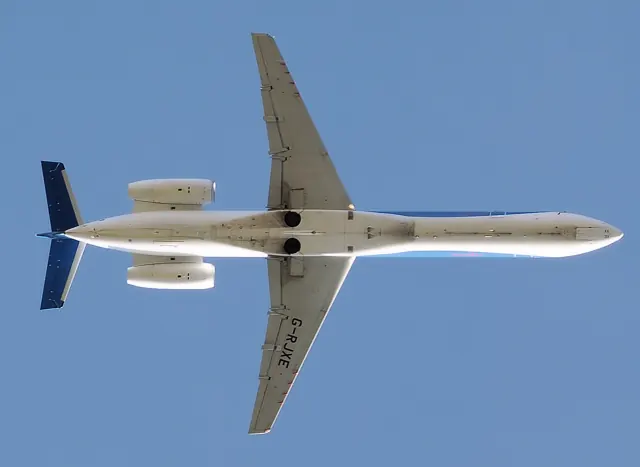
Embraer's regional-jet family, from the ERJ 135 to the longer ERJ 145.
A swept-wing business jet designed around high subsonic cruise speed.
A hybrid-electric regional-airliner concept represented in the simulator while the real programme develops.
A four-bladed utility helicopter developed from the LongRanger lineage.
A Canadian tandem-seat trainer developed after the Second World War.
A four-seat high-wing single that spans generations of conventional instruments and glass cockpits.
A midsize business jet developed by Bombardier’s Learjet division.
A four-engine airliner whose history also includes long-range maritime military service.
An open, single-seat ultralight with its propeller behind the pilot.
A twin-hull flying boat with its engines mounted together above the wing.
A low-wing piston twin that carries the Beechcraft touring-aircraft lineage into two-engine flying.
A two-seat composite light-aircraft family with a high wing and a compact enclosed cabin.
An advanced trainer known around the world as the Texan, Harvard and SNJ.
An enclosed, two-seat autogyro with side-by-side seating and a pusher propeller.
A radial-engine trainer that also served in combat and civilian warbird roles.
A two-seat training single with a high wing and fixed tricycle landing gear.
A two-seat composite trainer with a low wing and a large canopy.
A First World War trainer that became a familiar sight in the barnstorming era.
A self-launching sailplane family with its engine inside the fuselage and a folding nose propeller.
A box-shaped utility twin whose cabin and rear access are central to its design.
A high-wing utility turboprop designed for short-field passenger and cargo work.
A long-running touring single, familiar in both V-tail and conventional-tail forms.
The second-generation Harrier, designed around vectored thrust and short-field operation.
This is AirframeDB’s first release. More features and aircraft research are planned. Leave your email if you’d like occasional updates.