MSFS
Grumman G-21A Goose ↗
A small twin-engine amphibian that moved from business transport into military and utility service.
2 implementations+ Compare
Explore the aircraft. Find your simulator. Follow the sources.
A small twin-engine amphibian that moved from business transport into military and utility service.
A midsize business jet developed by Bombardier’s Learjet division.
A Brazilian light trainer with a high wing, tandem seats and a simple utility layout.
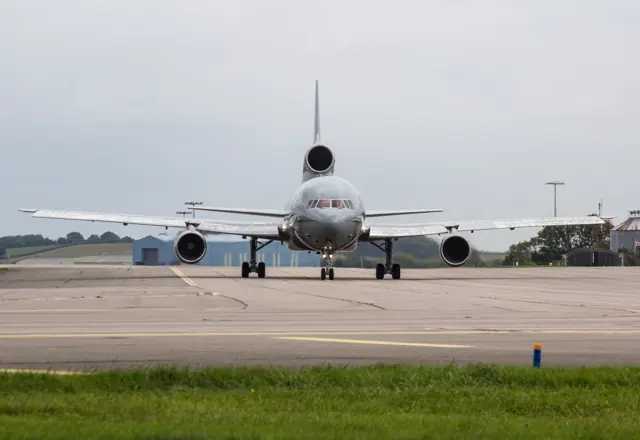
Lockheed's wide-body TriStar, with three RB211 engines and a distinctive tail intake.
A corrugated-metal transport best known in its three-engine form.
A pressurised single-engine turboprop family that combines a compact cabin with retractable gear.
A low-wing agricultural Cessna with a cockpit and hopper arranged around the job.
A Swedish reconnaissance and dive-bombing aircraft from the early 1940s.
A light business jet with a swept wing, rear-mounted engines and an integrated flight deck.
An unpowered military cargo glider designed to deliver troops and equipment behind a tow aircraft.
A modern utility single whose family includes both tailwheel and nosewheel configurations.
A two-seat composite light-aircraft family with a high wing and a compact enclosed cabin.
A four-bladed utility helicopter developed from the LongRanger lineage.
Piper's PA-31 utility twin, used in commuter, cargo and corporate transport.
A wartime fighter developed from the earlier Curtiss P-36.
A heavy-lift helicopter built around an open frame and an external working load.
A utility-aircraft family whose stretched 207 branch trades compact proportions for more cabin space.
The Model 525 CitationJet, the starting point of Cessna's CJ and M2 lineage.
The Huey: a turbine-powered utility helicopter with a broad cabin and an unmistakable two-bladed rotor.
Regional flying built around a high wing, two turboprops and short sectors.
A family of single-aisle airliners built around sidesticks, electronic flight controls and a shared cockpit.
A swept-wing business jet designed around high subsonic cruise speed.
The purpose-built Ryan monoplane used by Charles Lindbergh for his 1927 solo Atlantic crossing.
A cabin biplane with the lower wing placed ahead of the upper one.
This is AirframeDB’s first release. More features and aircraft research are planned. Leave your email if you’d like occasional updates.