X-Plane
Vans Aircraft RV-10 ↗
A four-seat kit-built touring aircraft that expanded the RV family beyond two-seat designs.
1 implementations+ Compare
Explore the aircraft. Find your simulator. Follow the sources.
A four-seat kit-built touring aircraft that expanded the RV family beyond two-seat designs.
A large long-haul twin that introduced Boeing's first commercial fly-by-wire airliner flight controls.
A twin-turboprop utility aircraft developed by Reims Aviation with Cessna.
A compact twin-engine transport helicopter with retractable gear and a long development history.
A purpose-built aerobatic monoplane family developed by pilot and designer Walter Extra.
An advanced trainer known around the world as the Texan, Harvard and SNJ.
A close-air-support aircraft with a straight wing, twin tail and two widely separated jet engines.
A light business jet with a swept wing, rear-mounted engines and an integrated flight deck.
A very large single-engine biplane designed for practical work from modest airfields.
A pioneering all-metal transport with an enclosed passenger cabin and corrugated skin.
A pressurised touring twin whose piston and turbine-conversion versions make a particularly interesting comparison.
A modern composite twin with a roomy cabin and two wing-mounted piston engines.
The purpose-built Ryan monoplane used by Charles Lindbergh for his 1927 solo Atlantic crossing.
A radial-engined light transport whose long career covered passengers, freight and military training.
A four-engine airliner that brought pressurised-cabin travel into scheduled service.
An enlarged Velocity kit aircraft with a canard and rear-mounted pusher propeller.
A four-seat composite touring and training aircraft developed from Diamond's smaller two-seater.
A three-engine airliner that became a mainstay of Soviet and Russian passenger transport.
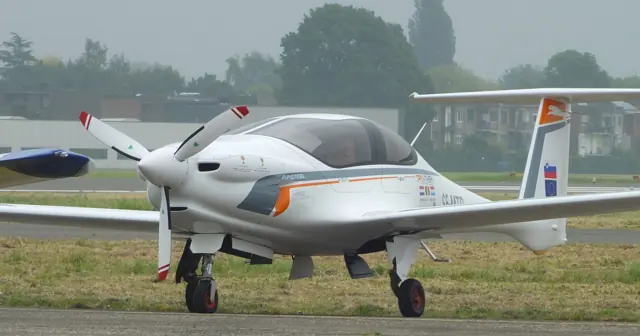
Pipistrel's streamlined four-seat composite-aircraft design.
A push-pull twin with one engine at each end of the central fuselage.
A low-wing piston twin that carries the Beechcraft touring-aircraft lineage into two-engine flying.
An unpowered military cargo glider designed to deliver troops and equipment behind a tow aircraft.
A stretched development of the DC-9 with rear-mounted engines and a five-abreast cabin.
This is AirframeDB’s first release. More features and aircraft research are planned. Leave your email if you’d like occasional updates.