MSFS
Mudry CAP 10 ↗
A French two-seat aerobatic trainer with side-by-side seating and a distinctive curved wing outline.
2 implementations+ Compare
Explore the aircraft. Find your simulator. Follow the sources.
A French two-seat aerobatic trainer with side-by-side seating and a distinctive curved wing outline.
Cirrus's first type-certified aircraft, a composite piston single.
A four-seat kit-built touring aircraft that expanded the RV family beyond two-seat designs.
A twin-engine business jet designed to retain some of the utility flexibility associated with the PC-12.
A midsize business jet developed by Bombardier’s Learjet division.
A large long-haul twin that introduced Boeing's first commercial fly-by-wire airliner flight controls.
A three-engine airliner that became a mainstay of Soviet and Russian passenger transport.
A push-pull twin with one engine at each end of the central fuselage.
Avro's delta-wing bomber, developed for Britain's postwar strategic force.
A medium commercial helicopter designed for passenger and utility transport.
A twin-turboprop regional airliner developed through Swedish and American industrial cooperation.
A long-range strategic bomber with a swept wing and eight jet engines in paired pods.
A four-seat high-wing single that spans generations of conventional instruments and glass cockpits.
A pioneering all-metal transport with an enclosed passenger cabin and corrugated skin.
An enclosed, two-seat autogyro with side-by-side seating and a pusher propeller.
A British jet trainer with tandem seating and a long military training career.
A full-length double-deck airliner built for very high passenger capacity.
A heavy transport helicopter whose two large rotors remove the need for a tail rotor.
A stretched development of the DC-9 with rear-mounted engines and a five-abreast cabin.
A compact aerobatic biplane family with both single-seat and tandem-seat branches.
Two related Dutch regional jets developed from the F28 lineage.
The CJ4 belongs to Cessna's light-jet line, with two rear-mounted engines and a T-tail.
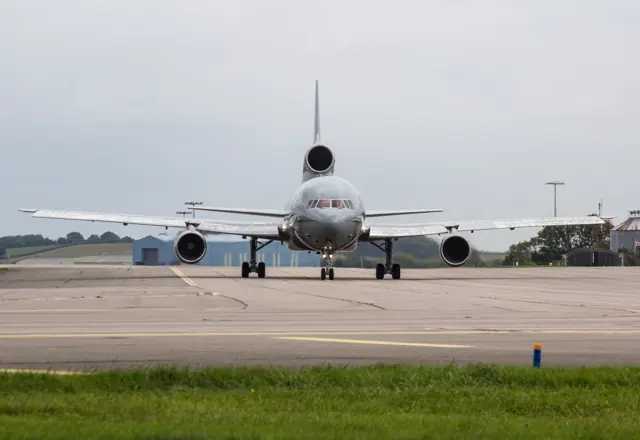
Lockheed's wide-body TriStar, with three RB211 engines and a distinctive tail intake.
The second-generation Harrier, designed around vectored thrust and short-field operation.
This is AirframeDB’s first release. More features and aircraft research are planned. Leave your email if you’d like occasional updates.