MSFS
Extra 330LT ↗
A purpose-built aerobatic monoplane family developed by pilot and designer Walter Extra.
2 implementations+ Compare
Explore the aircraft. Find your simulator. Follow the sources.
A purpose-built aerobatic monoplane family developed by pilot and designer Walter Extra.
The Huey: a turbine-powered utility helicopter with a broad cabin and an unmistakable two-bladed rotor.
The JetRanger and LongRanger family: a familiar turbine-helicopter shape with distinct cabin lengths.
A stretched development of the DC-9 with rear-mounted engines and a five-abreast cabin.
A lightweight pusher family with an enclosed cabin and a high, braced wing.
A side-by-side two-seat sailplane with a retractable powerplant for self-launching.
A compact twin-engine helicopter widely used for medical, police and training work.
A tandem-seat homebuilt jet with composite construction and retractable landing gear.
The second-generation Harrier, designed around vectored thrust and short-field operation.
A modern two-seat piston helicopter designed around the training role.
A carrier-capable multirole fighter, larger than the earlier Hornet from which it developed.
A two-seat training single with a high wing and fixed tricycle landing gear.
A long-range trijet developed from the DC-10 with a stretched fuselage and revised wing and cockpit.
A regional turboprop family whose short early versions and larger Q400 have different proportions and systems.
A three-engine airliner that became a mainstay of Soviet and Russian passenger transport.
A long-running touring single, familiar in both V-tail and conventional-tail forms.
The CJ4 belongs to Cessna's light-jet line, with two rear-mounted engines and a T-tail.
A fixed-wing observation aircraft with a helicopter-like view from its glazed nose.
A turbine-powered utility helicopter with a broad cabin and a long international service history.
A purpose-built agricultural aircraft that also became a single-engine air tanker.
A corrugated-metal transport best known in its three-engine form.
A pressurised touring twin whose piston and turbine-conversion versions make a particularly interesting comparison.
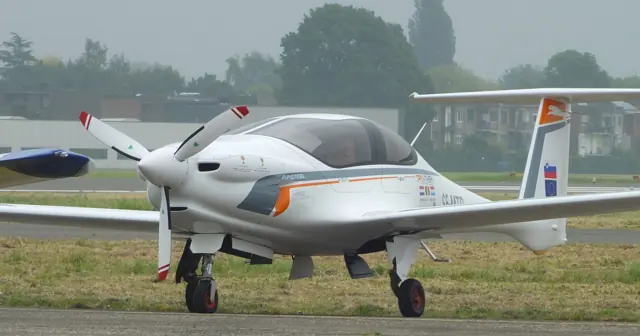
Pipistrel's streamlined four-seat composite-aircraft design.
An enclosed, two-seat autogyro with side-by-side seating and a pusher propeller.
This is AirframeDB’s first release. More features and aircraft research are planned. Leave your email if you’d like occasional updates.