MSFS
Beechcraft Model 18 Twin Beech ↗
A radial-engined light transport whose long career covered passengers, freight and military training.
1 implementations+ Compare
Explore the aircraft. Find your simulator. Follow the sources.
A radial-engined light transport whose long career covered passengers, freight and military training.
A Brazilian light trainer with a high wing, tandem seats and a simple utility layout.
A DC-10-derived tanker that combined aerial refuelling with passenger and cargo transport.
A large twin-engine helicopter from the Super Puma line, used for offshore and public-service work.
An open-cockpit biplane trainer that found a second life in civilian flying.
A two-seat, twin-engine fighter that served naval and land-based air forces in many roles.
A light tandem-seat taildragger built around the familiar braced high-wing layout.
A single-engine utility helicopter known as the Écureuil, Squirrel and AStar.
A large long-haul twin that introduced Boeing's first commercial fly-by-wire airliner flight controls.
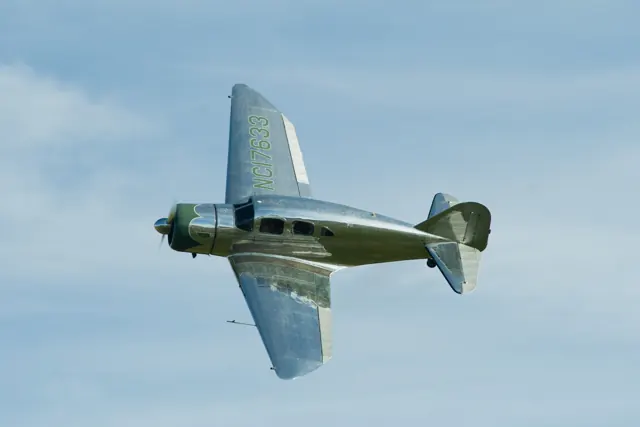
A late-1930s cabin aircraft with metal construction and retractable landing gear.
A two-seat naval fighter with variable-sweep wings and a cockpit built around pilot and radar-intercept officer roles.
A twin-turboprop family whose smaller conventional-tail and larger T-tail branches have distinct identities.
A British jet trainer with tandem seating and a long military training career.
A carrier-capable multirole fighter, larger than the earlier Hornet from which it developed.
A twin-engine business jet designed to retain some of the utility flexibility associated with the PC-12.
An unpowered military cargo glider designed to deliver troops and equipment behind a tow aircraft.
Beechcraft's Model 76, designed to introduce pilots to twin-engine flying.
A fixed-wing observation aircraft with a helicopter-like view from its glazed nose.
A two-seat composite trainer with a low wing and a large canopy.
A swept-wing business jet designed around high subsonic cruise speed.
A personal jet with one engine above the rear fuselage and a distinctive V-tail.
A shorter wide-body Airbus from the transition to two-pilot, electronic-instrument cockpits.
A twin-turbine Huey descendant with a four-blade main rotor.
A regional jet family with four small engines, a high wing and a large split tail airbrake.
This is AirframeDB’s first release. More features and aircraft research are planned. Leave your email if you’d like occasional updates.