MSFS
Draco X ↗
The Wilga is the real-aircraft starting point for Mike Patey's DRACO and the simulator's DRACO X.
1 implementations+ Compare
Explore the aircraft. Find your simulator. Follow the sources.
The Wilga is the real-aircraft starting point for Mike Patey's DRACO and the simulator's DRACO X.
A tandem two-seat sailplane family used for training and cross-country soaring.
A small two-seat piston helicopter with a two-bladed main rotor.
A turbine-powered utility helicopter with a broad cabin and a long international service history.
A compact twin-engine helicopter widely used for medical, police and training work.
A four-engine airliner that brought pressurised-cabin travel into scheduled service.
A compact Japanese twin turboprop with a high wing and pressurised cabin.
A short-field Savage with leading-edge slats and a distinct Got Friends simulator implementation.
A small observation-helicopter family with a rounded cabin and compact rotor system.
An Italian light aircraft known for military training and aerobatic use.
An open-cockpit biplane trainer that found a second life in civilian flying.
A five-seat turbine helicopter developed from Robinson's smaller piston-helicopter line.
A corrugated-metal, three-engine transport from the formative years of airline travel.
An advanced trainer known around the world as the Texan, Harvard and SNJ.
The Mitchell medium bomber, named for aviation advocate Billy Mitchell.
A twin-radial airliner that helped make practical passenger transport a regular business.
The purpose-built Ryan monoplane used by Charles Lindbergh for his 1927 solo Atlantic crossing.
A twin-hull flying boat with its engines mounted together above the wing.
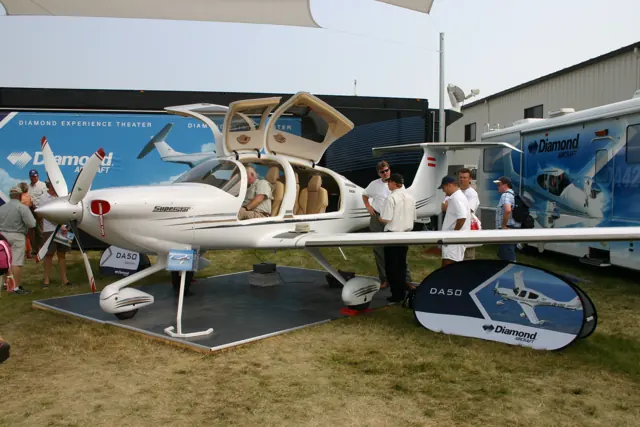
A five-seat composite single whose development led to the diesel DA50 RG.
A shorter wide-body Airbus from the transition to two-pilot, electronic-instrument cockpits.
The CJ4 belongs to Cessna's light-jet line, with two rear-mounted engines and a T-tail.
A carrier-capable multirole fighter, larger than the earlier Hornet from which it developed.
A twin-engine utility helicopter with roots in the BK 117 and EC145 families.
This is AirframeDB’s first release. More features and aircraft research are planned. Leave your email if you’d like occasional updates.