MSFS
Ryan NYP “Spirit of St. Louis” ↗
The purpose-built Ryan monoplane used by Charles Lindbergh for his 1927 solo Atlantic crossing.
2 implementations+ Compare
Explore the aircraft. Find your simulator. Follow the sources.
The purpose-built Ryan monoplane used by Charles Lindbergh for his 1927 solo Atlantic crossing.
A compact aerobatic biplane family with both single-seat and tandem-seat branches.
A utility piston twin designed for commuter and specialist transport missions.
A tailwheel utility single built around a high wing and a substantial working cabin.
A corrugated-metal, three-engine transport from the formative years of airline travel.
A four-engine military turboprop designed to combine tactical access with long-distance transport.
A compact Japanese twin turboprop with a high wing and pressurised cabin.
A low-wing piston family that spans simple trainers, touring aircraft and retractable-gear Arrows.
The fixed-gear, six-cylinder touring branch of Piper's PA-28 family.
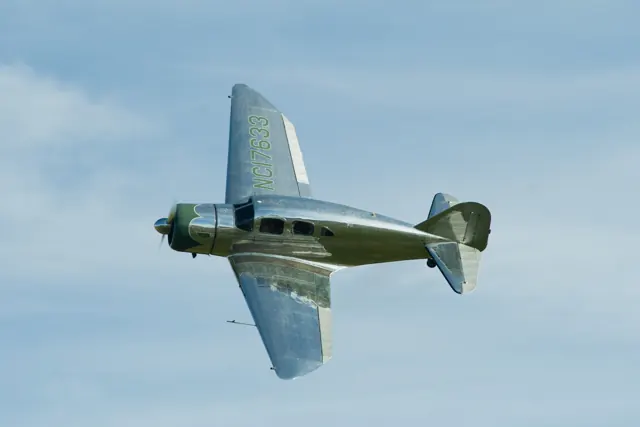
A late-1930s cabin aircraft with metal construction and retractable landing gear.
An open-cockpit biplane trainer that found a second life in civilian flying.
A twin-radial airliner that helped make practical passenger transport a regular business.
A twin-turbine Huey descendant with a four-blade main rotor.
A close-air-support aircraft with a straight wing, twin tail and two widely separated jet engines.
A single-engine turboprop workhorse for passenger services, freight and remote-area transport.
A tandem-seat homebuilt jet with composite construction and retractable landing gear.
A tandem two-seat sailplane family used for training and cross-country soaring.
A compact Italian light twin with a shoulder wing and metal airframe.
A midsize business jet developed by Bombardier’s Learjet division.
The Mitchell medium bomber, named for aviation advocate Billy Mitchell.
A small twin-engine amphibian that moved from business transport into military and utility service.
A very light twin jet developed from the Eclipse 500.
A shorter wide-body Airbus from the transition to two-pilot, electronic-instrument cockpits.
A cabin-class piston twin designed for commuter, cargo and utility work.
This is AirframeDB’s first release. More features and aircraft research are planned. Leave your email if you’d like occasional updates.