X-Plane
Cessna Citation X ↗
A swept-wing business jet designed around high subsonic cruise speed.
1 implementations+ Compare
Explore the aircraft. Find your simulator. Follow the sources.
A swept-wing business jet designed around high subsonic cruise speed.
A twin-engine business jet designed to retain some of the utility flexibility associated with the PC-12.
A pressurised touring twin whose piston and turbine-conversion versions make a particularly interesting comparison.
A low-wing piston family that spans simple trainers, touring aircraft and retractable-gear Arrows.
A light tandem-seat taildragger built around the familiar braced high-wing layout.
A twin-turboprop family whose smaller conventional-tail and larger T-tail branches have distinct identities.
An enlarged Velocity kit aircraft with a canard and rear-mounted pusher propeller.
A light turbine helicopter whose land-based Scout and naval Wasp branches served different jobs.
A two-seat composite trainer with a low wing and a large canopy.
A rear-engined trijet built to bring jet service to shorter routes and smaller airports.
The CJ4 belongs to Cessna's light-jet line, with two rear-mounted engines and a T-tail.
A twin-turbine Huey descendant with a four-blade main rotor.
A four-engine airliner whose history also includes long-range maritime military service.
A high-wing utility aircraft known for short-field work and a broad choice of working configurations.
A six-engine heavy transport created for exceptionally large external and internal loads.
A four-seat touring family whose Commander 114 added a larger engine and further refinements.
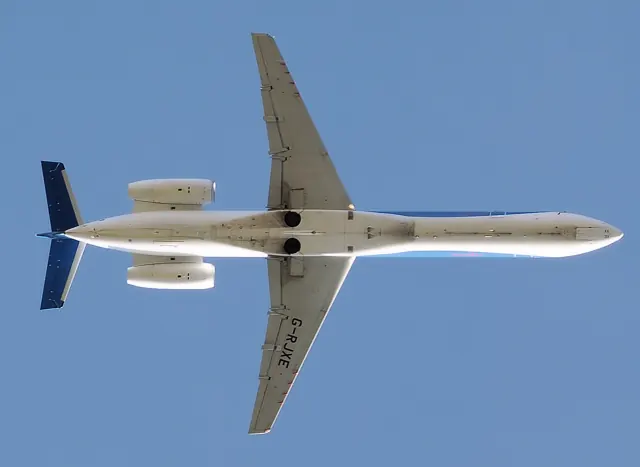
Embraer's regional-jet family, from the ERJ 135 to the longer ERJ 145.
A fixed-gear twin turboprop with a long history in regional and remote-area transport.
A modern utility single whose family includes both tailwheel and nosewheel configurations.
A post-war Czech light twin with a rounded cabin and engines carried on a low wing.
A family of single-aisle airliners built around sidesticks, electronic flight controls and a shared cockpit.
The purpose-built Ryan monoplane used by Charles Lindbergh for his 1927 solo Atlantic crossing.
A pressurised single-engine turboprop family that combines a compact cabin with retractable gear.
A full-length double-deck airliner built for very high passenger capacity.
This is AirframeDB’s first release. More features and aircraft research are planned. Leave your email if you’d like occasional updates.