MSFS
Airbus H145 ↗
A twin-engine utility helicopter with roots in the BK 117 and EC145 families.
1 implementations+ Compare
Explore the aircraft. Find your simulator. Follow the sources.
A twin-engine utility helicopter with roots in the BK 117 and EC145 families.
A very large single-engine biplane designed for practical work from modest airfields.
A tandem two-seat sailplane family used for training and cross-country soaring.
A large amphibious flying boat built around maritime rescue and utility transport.
A low-wing piston twin that carries the Beechcraft touring-aircraft lineage into two-engine flying.
A compact Czech touring aircraft with side-by-side seats and a streamlined low-wing airframe.
Beechcraft's Model 76, designed to introduce pilots to twin-engine flying.
A pressurised single turboprop with a large cargo door and a broad range of working roles.
A box-shaped utility twin whose cabin and rear access are central to its design.
A light tandem-seat taildragger built around the familiar braced high-wing layout.
A long-range twin designed around a new wide-body airframe and extensive composite construction.
A First World War trainer that became a familiar sight in the barnstorming era.
A specialised reconnaissance aircraft designed for very high altitude and sustained supersonic flight.
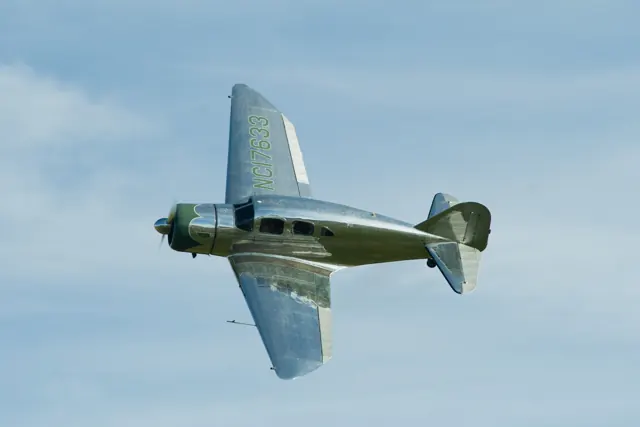
A late-1930s cabin aircraft with metal construction and retractable landing gear.
A compact twin-engine helicopter widely used for medical, police and training work.
A high-wing twin turboprop developed for regional freight and passenger transport.
A military liaison aircraft built around a high wing, tandem cabin and short-field utility work.
A fixed-wing observation aircraft with a helicopter-like view from its glazed nose.
The Mitchell medium bomber, named for aviation advocate Billy Mitchell.
A single-engine turboprop workhorse for passenger services, freight and remote-area transport.
Dassault's long-range Falcon 8X, developed from the three-engine 7X.
Avro's delta-wing bomber, developed for Britain's postwar strategic force.
A two-seat naval fighter with variable-sweep wings and a cockpit built around pilot and radar-intercept officer roles.
The second-generation Harrier, designed around vectored thrust and short-field operation.
This is AirframeDB’s first release. More features and aircraft research are planned. Leave your email if you’d like occasional updates.