X-Plane
Beechcraft Duchess ↗
Beechcraft's Model 76, designed to introduce pilots to twin-engine flying.
1 implementations+ Compare
Explore the aircraft. Find your simulator. Follow the sources.
Beechcraft's Model 76, designed to introduce pilots to twin-engine flying.
A four-seat, pressurised kit aircraft with a composite airframe and retractable landing gear.
The H130 utility helicopter, descended from the AS350 and fitted with a Fenestron.
A swept-wing business jet designed around high subsonic cruise speed.
A twin-turboprop utility aircraft developed by Reims Aviation with Cessna.
A fixed-gear twin turboprop with a long history in regional and remote-area transport.
A push-pull twin with one engine at each end of the central fuselage.
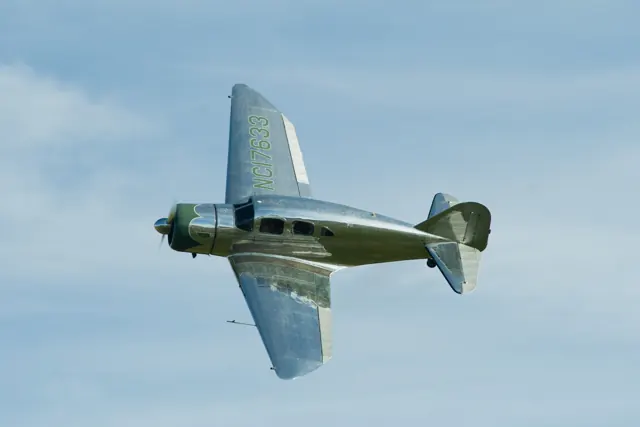
A late-1930s cabin aircraft with metal construction and retractable landing gear.
A high-wing twin turboprop developed for regional freight and passenger transport.
A cabin-class piston twin designed for commuter, cargo and utility work.
A stretched development of the DC-9 with rear-mounted engines and a five-abreast cabin.
A light turbine helicopter combining an Alouette II airframe with more powerful Alouette III components.
A long-range strategic bomber with a swept wing and eight jet engines in paired pods.
The purpose-built Ryan monoplane used by Charles Lindbergh for his 1927 solo Atlantic crossing.
A single-engine utility helicopter known as the Écureuil, Squirrel and AStar.
A heavy-lift helicopter built around an open frame and an external working load.
A carrier-capable multirole fighter, larger than the earlier Hornet from which it developed.
A post-war Czech light twin with a rounded cabin and engines carried on a low wing.
A regional jet family with four small engines, a high wing and a large split tail airbrake.
Epic's experimental light-jet project, represented in simulation by Aerobask.
A fixed-wing observation aircraft with a helicopter-like view from its glazed nose.
A pioneering light helicopter whose bubble cabin and exposed structure became widely recognisable.
A purpose-built aerobatic monoplane family developed by pilot and designer Walter Extra.
A cabin biplane with the lower wing placed ahead of the upper one.
This is AirframeDB’s first release. More features and aircraft research are planned. Leave your email if you’d like occasional updates.