X-Plane
Cessna 206 Stationair ↗
The Stationair utility family, combining a high wing with fixed landing gear.
1 implementations+ Compare
Explore the aircraft. Find your simulator. Follow the sources.
The Stationair utility family, combining a high wing with fixed landing gear.
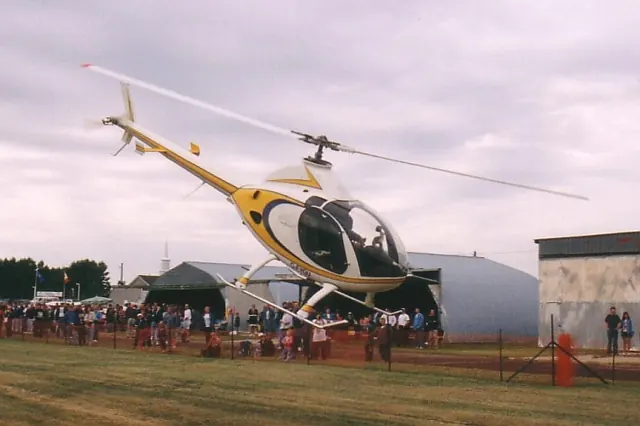
RotorWay's two-seat kit-helicopter family, with piston and turbine simulator interpretations.
A long-range trijet developed from the DC-10 with a stretched fuselage and revised wing and cockpit.
A six-engine heavy transport created for exceptionally large external and internal loads.
An amphibious turboprop designed around scooping water and delivering it to fires.
Cessna's unusual piston-powered helicopter, marketed as the Skyhook.
A high-wing twin turboprop developed for regional freight and passenger transport.
A tandem-seat jet trainer that also found a second life in civilian display and racing.
A low-wing piston family that spans simple trainers, touring aircraft and retractable-gear Arrows.
A single-seat aerobatic monoplane that also became a familiar air-racing aircraft.
A twin-turboprop regional airliner developed through Swedish and American industrial cooperation.
The H130 utility helicopter, descended from the AS350 and fitted with a Fenestron.
A long-range twin whose programme emphasised composite construction and more electrically powered systems.
A specialised reconnaissance aircraft designed for very high altitude and sustained supersonic flight.
A three-engine airliner that became a mainstay of Soviet and Russian passenger transport.
A short-field Savage with leading-edge slats and a distinct Got Friends simulator implementation.
A two-seat composite trainer with a low wing and a large canopy.
A four-engine military turboprop designed to combine tactical access with long-distance transport.
A composite amphibian that carries Dornier's centreline engine arrangement into the turboprop era.
The four-engine Flying Fortress, a major American bomber of the Second World War.
A wartime fighter developed from the earlier Curtiss P-36.
A swept-wing business jet designed around high subsonic cruise speed.
A stretched development of the DC-9 with rear-mounted engines and a five-abreast cabin.
This is AirframeDB’s first release. More features and aircraft research are planned. Leave your email if you’d like occasional updates.