MSFS
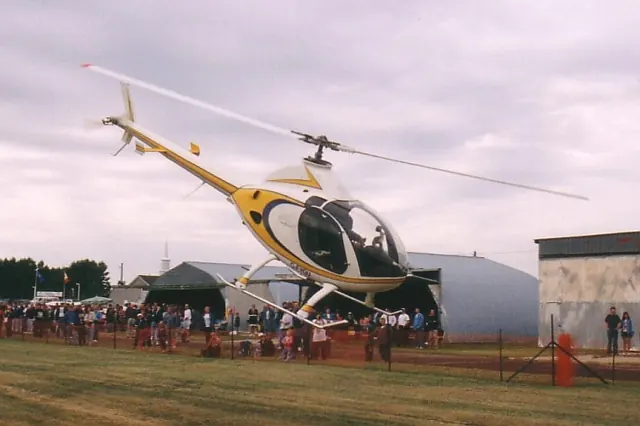
RotorWay Exec / JetExec ↗
RotorWay's two-seat kit-helicopter family, with piston and turbine simulator interpretations.
1 implementations+ Compare
Explore the aircraft. Find your simulator. Follow the sources.
RotorWay's two-seat kit-helicopter family, with piston and turbine simulator interpretations.
An open, single-seat ultralight with its propeller behind the pilot.
A rear-engined trijet built to bring jet service to shorter routes and smaller airports.
A carbon-fibre aerobatic monoplane family with a dedicated air-racing branch.
A wartime fighter developed from the earlier Curtiss P-36.
A small three-engine demonstrator created to explore technologies for a future supersonic airliner.
A heavy-lift helicopter built around an open frame and an external working load.
A British jet trainer with tandem seating and a long military training career.
A long-range strategic bomber with a swept wing and eight jet engines in paired pods.
A four-abreast regional-jet family spanning the E170, E175, E190 and E195.
A jet-powered military transport designed for both strategic loads and tactical airfield access.
A two-seat training single with a high wing and fixed tricycle landing gear.
A military transport developed from the DC-3, used for cargo, troops, parachuting and glider towing.
A huge wooden flying-boat prototype that made one brief flight in 1947.
A utility piston twin designed for commuter and specialist transport missions.
A purpose-built agricultural aircraft that also became a single-engine air tanker.
Airbus's first production aircraft, built around a twin-engine wide-body layout.
A shorter wide-body Airbus from the transition to two-pilot, electronic-instrument cockpits.
A box-shaped utility twin whose cabin and rear access are central to its design.
A corrugated-metal transport best known in its three-engine form.
Piper's PA-31 utility twin, used in commuter, cargo and corporate transport.
A post-war Czech light twin with a rounded cabin and engines carried on a low wing.
The four-engine Flying Fortress, a major American bomber of the Second World War.
The second-generation Harrier, designed around vectored thrust and short-field operation.
This is AirframeDB’s first release. More features and aircraft research are planned. Leave your email if you’d like occasional updates.



























