MSFS X-Plane
BAe Hawk ↗
A British jet trainer with tandem seating and a long military training career.
2 implementations+ Compare
Explore the aircraft. Find your simulator. Follow the sources.
A British jet trainer with tandem seating and a long military training career.
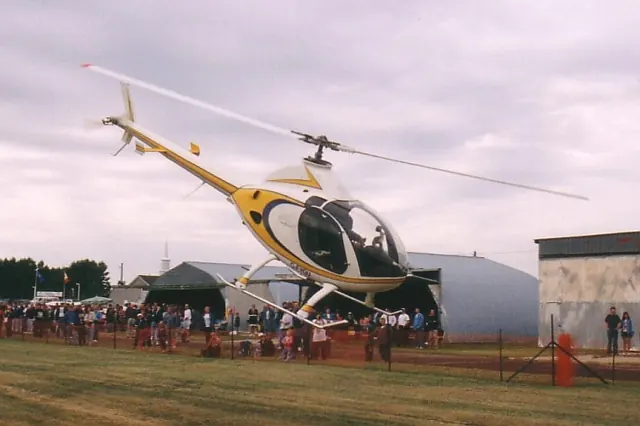
A modern two-seat piston helicopter designed around the training role.
A regional jet family with four small engines, a high wing and a large split tail airbrake.
A two-seat naval fighter with variable-sweep wings and a cockpit built around pilot and radar-intercept officer roles.
A large long-haul twin that introduced Boeing's first commercial fly-by-wire airliner flight controls.
An enlarged Velocity kit aircraft with a canard and rear-mounted pusher propeller.
A turbine-powered utility helicopter with a broad cabin and a long international service history.
A small twin-engine amphibian that moved from business transport into military and utility service.
A stretched development of the DC-9 with rear-mounted engines and a five-abreast cabin.
A fixed-gear twin turboprop with a long history in regional and remote-area transport.
A 1920s transport family that developed from a single-engine airliner into a trimotor.
RotorWay's two-seat kit-helicopter family, with piston and turbine simulator interpretations.
A long-range twin designed around a new wide-body airframe and extensive composite construction.
A Canadian tandem-seat trainer developed after the Second World War.
A purpose-built aerobatic monoplane family developed by pilot and designer Walter Extra.
A two-seat, twin-engine fighter that served naval and land-based air forces in many roles.
A compact utility helicopter distinguished by its enclosed Fenestron tail rotor.
A DC-10-derived tanker that combined aerial refuelling with passenger and cargo transport.
The Model 525 CitationJet, the starting point of Cessna's CJ and M2 lineage.
A personal jet with one engine above the rear fuselage and a distinctive V-tail.
A single-engine turboprop workhorse for passenger services, freight and remote-area transport.
The purpose-built Ryan monoplane used by Charles Lindbergh for his 1927 solo Atlantic crossing.
A push-pull twin with one engine at each end of the central fuselage.
A four-abreast regional-jet family spanning the E170, E175, E190 and E195.
This is AirframeDB’s first release. More features and aircraft research are planned. Leave your email if you’d like occasional updates.