X-Plane
Epic Victory ↗
Epic's experimental light-jet project, represented in simulation by Aerobask.
1 implementations+ Compare
Explore the aircraft. Find your simulator. Follow the sources.
Epic's experimental light-jet project, represented in simulation by Aerobask.
A regional turboprop family whose short early versions and larger Q400 have different proportions and systems.
A post-war Czech light twin with a rounded cabin and engines carried on a low wing.
A twin-turboprop regional airliner developed through Swedish and American industrial cooperation.
A pressurised twin turboprop with a canard, composite airframe and rear-facing propellers.
A twin-hull flying boat with its engines mounted together above the wing.
Tecnam's four-seat high-wing single, built with metal and carbon-fibre components.
A Canadian tandem-seat trainer developed after the Second World War.
A four-bladed utility helicopter developed from the LongRanger lineage.
A Polish utility aircraft designed for short takeoffs and landings.
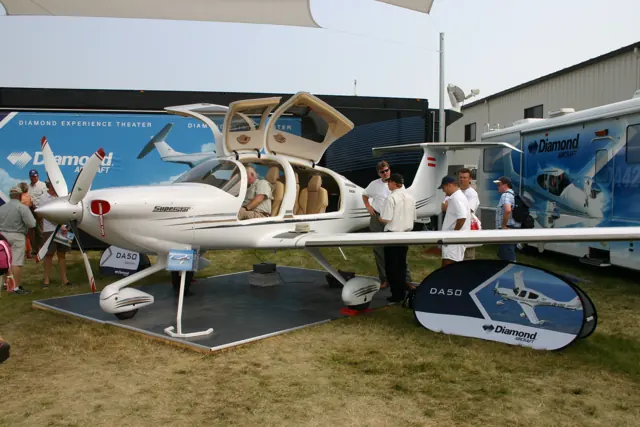
A five-seat composite single whose development led to the diesel DA50 RG.
A five-seat turbine helicopter developed from Robinson's smaller piston-helicopter line.
A low-wing agricultural Cessna with a cockpit and hopper arranged around the job.
A French two-seat aerobatic trainer with side-by-side seating and a distinctive curved wing outline.
A twin-engine business jet designed to retain some of the utility flexibility associated with the PC-12.
A two-seat composite kit aircraft developed from the Lancair 320.
A side-by-side two-seat sailplane with a retractable powerplant for self-launching.
Diamond's four-seat light twin, developed with diesel-powered versions.
A British jet trainer with tandem seating and a long military training career.
A low-wing piston family that spans simple trainers, touring aircraft and retractable-gear Arrows.
A light business jet with a swept wing, rear-mounted engines and an integrated flight deck.
A three-engine airliner that became a mainstay of Soviet and Russian passenger transport.
The Stationair utility family, combining a high wing with fixed landing gear.
The second-generation Harrier, designed around vectored thrust and short-field operation.
This is AirframeDB’s first release. More features and aircraft research are planned. Leave your email if you’d like occasional updates.