X-Plane
Boeing 757 ↗
A narrow-body twin developed as a new generation of medium-range airliner.
1 implementations+ Compare
Explore the aircraft. Find your simulator. Follow the sources.
A narrow-body twin developed as a new generation of medium-range airliner.
A four-seat composite touring and training aircraft developed from Diamond's smaller two-seater.
A turbine-powered utility helicopter with a broad cabin and a long international service history.
A fixed-wing observation aircraft with a helicopter-like view from its glazed nose.
A five-seat turbine helicopter developed from Robinson's smaller piston-helicopter line.
A two-seat naval fighter with variable-sweep wings and a cockpit built around pilot and radar-intercept officer roles.
A Polish utility aircraft designed for short takeoffs and landings.
A stretched development of the DC-9 with rear-mounted engines and a five-abreast cabin.
A four-bladed utility helicopter developed from the LongRanger lineage.
A four-seat touring family whose Commander 114 added a larger engine and further refinements.
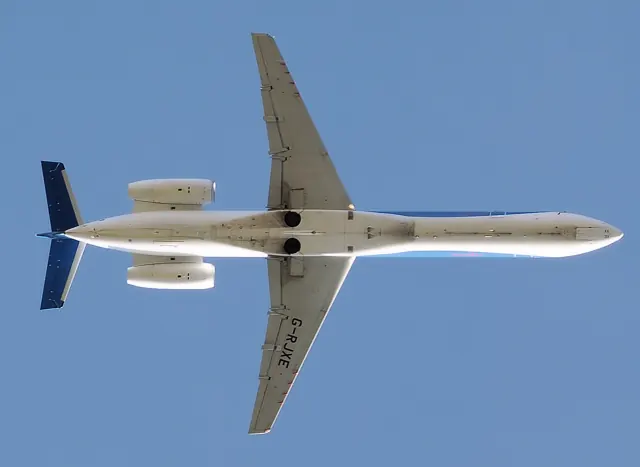
Embraer's regional-jet family, from the ERJ 135 to the longer ERJ 145.
A modern medium twin-engine helicopter developed as a successor to the Dauphin line.
A compact twin-engine helicopter widely used for medical, police and training work.
The four-engine Flying Fortress, a major American bomber of the Second World War.
A cabin-class piston twin designed for commuter, cargo and utility work.
A four-seat, pressurised kit aircraft with a composite airframe and retractable landing gear.
A radial-engine trainer that also served in combat and civilian warbird roles.
A modern two-seat piston helicopter designed around the training role.
A light tandem-seat taildragger built around the familiar braced high-wing layout.
A carrier-capable multirole fighter, larger than the earlier Hornet from which it developed.
A medium commercial helicopter designed for passenger and utility transport.
A heavy-lift helicopter built around an open frame and an external working load.
A pressurised touring twin whose piston and turbine-conversion versions make a particularly interesting comparison.
A shorter wide-body Airbus from the transition to two-pilot, electronic-instrument cockpits.
This is AirframeDB’s first release. More features and aircraft research are planned. Leave your email if you’d like occasional updates.