X-Plane
Lancair Legacy ↗
A two-seat composite kit aircraft developed from the Lancair 320.
1 implementations+ Compare
Explore the aircraft. Find your simulator. Follow the sources.
A two-seat composite kit aircraft developed from the Lancair 320.
A four-engine military turboprop designed to combine tactical access with long-distance transport.
A Polish utility aircraft designed for short takeoffs and landings.
An open-cockpit biplane trainer that found a second life in civilian flying.
A compact aerobatic biplane family with both single-seat and tandem-seat branches.
An enclosed-cabin development of the Bell 47, shaped for passenger and executive transport.
A large twin-radial transport that carried heavy loads through wartime and post-war freight service.
A two-seat light amphibian with a compact boat hull and a pusher propeller.
The four-engine Flying Fortress, a major American bomber of the Second World War.
A large long-haul twin that introduced Boeing's first commercial fly-by-wire airliner flight controls.
A compact Italian light twin with a shoulder wing and metal airframe.
A stretched development of the DC-9 with rear-mounted engines and a five-abreast cabin.
A high-wing utility aircraft known for short-field work and a broad choice of working configurations.
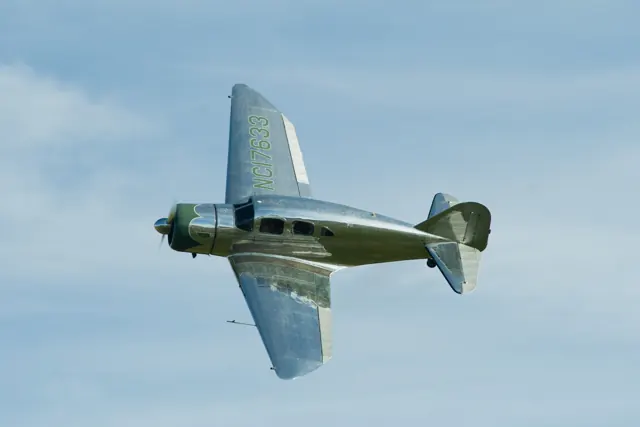
A late-1930s cabin aircraft with metal construction and retractable landing gear.
A single-seat competition sailplane offered in Standard and 18-metre configurations.
A twin-turboprop family whose smaller conventional-tail and larger T-tail branches have distinct identities.
A fixed-wing observation aircraft with a helicopter-like view from its glazed nose.
An enlarged Velocity kit aircraft with a canard and rear-mounted pusher propeller.
A specialised reconnaissance aircraft designed for very high altitude and sustained supersonic flight.
A pressurised single turboprop with a large cargo door and a broad range of working roles.
The fixed-gear, six-cylinder touring branch of Piper's PA-28 family.
Tecnam's four-seat high-wing single, built with metal and carbon-fibre components.
A cabin biplane with the lower wing placed ahead of the upper one.
A shorter wide-body Airbus from the transition to two-pilot, electronic-instrument cockpits.
This is AirframeDB’s first release. More features and aircraft research are planned. Leave your email if you’d like occasional updates.