MSFS X-Plane
North American T-6 Texan ↗
An advanced trainer known around the world as the Texan, Harvard and SNJ.
2 implementations+ Compare
Explore the aircraft. Find your simulator. Follow the sources.
An advanced trainer known around the world as the Texan, Harvard and SNJ.
A low-wing piston family that spans simple trainers, touring aircraft and retractable-gear Arrows.
A British utility twin built around short regional and practical transport work.
The Stationair utility family, combining a high wing with fixed landing gear.
A two-seat composite kit aircraft developed from the Lancair 320.
A four-seat, pressurised kit aircraft with a composite airframe and retractable landing gear.
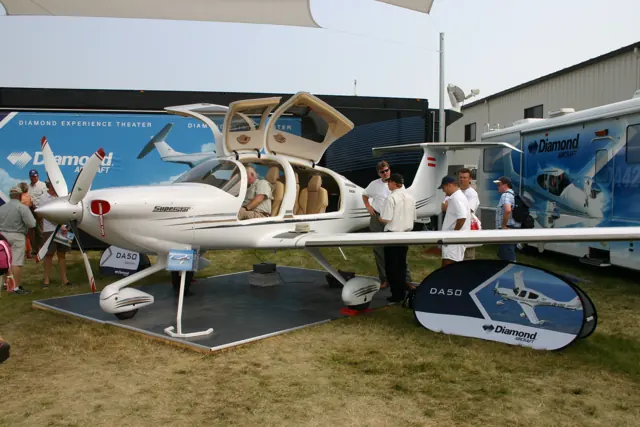
A two-seat composite trainer with a low wing and a large canopy.
A twin-turboprop family whose smaller conventional-tail and larger T-tail branches have distinct identities.
The JetRanger and LongRanger family: a familiar turbine-helicopter shape with distinct cabin lengths.
A six-seat composite single turboprop with a pressurised cabin and retractable gear.
An open-cockpit biplane trainer that found a second life in civilian flying.
A compact Italian light twin with a shoulder wing and metal airframe.
The Mitchell medium bomber, named for aviation advocate Billy Mitchell.
A regional turboprop family whose short early versions and larger Q400 have different proportions and systems.
A four-engine tactical transport built around a rear loading ramp and access to austere airfields.
A four-abreast regional-jet family spanning the E170, E175, E190 and E195.
A specialised reconnaissance aircraft designed for very high altitude and sustained supersonic flight.
A single-engine turboprop workhorse for passenger services, freight and remote-area transport.
A five-seat composite single whose development led to the diesel DA50 RG.
A low-wing piston twin that carries the Beechcraft touring-aircraft lineage into two-engine flying.
Cessna's retractable-gear Centurion, a high-wing touring aircraft.
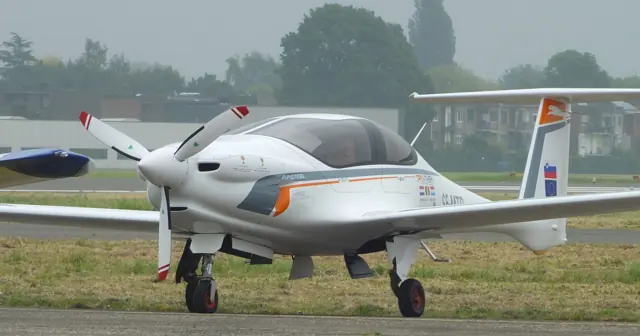
Pipistrel's streamlined four-seat composite-aircraft design.
A long-range strategic bomber with a swept wing and eight jet engines in paired pods.
The second-generation Harrier, designed around vectored thrust and short-field operation.
This is AirframeDB’s first release. More features and aircraft research are planned. Leave your email if you’d like occasional updates.