Find aircraft background, systems descriptions and manuals for the aircraft you are researching. Each note keeps its source and version context close by.
Simulator manuals describe the developer’s implementation. Aircraft background is research-based; pilot accounts describe an individual’s experience. Coverage here is limited to the selected notes and linked resources, not the full contents of every manual.
De Havilland Canada DHC-6 Twin Otter
The Twin Otter was developed in the 1960s around short-field utility work. Two turboprops, a high wing and a substantial cabin support passenger and freight operations. Its fixed gear can be replaced or supplemented by specialist wheel, ski and float configurations.
Production resumed under Viking before the programme returned to the De Havilland Canada name. Different series and later developments have their own engines and avionics. The simulator packages identify their series and cockpit generation.
Aircraft / family
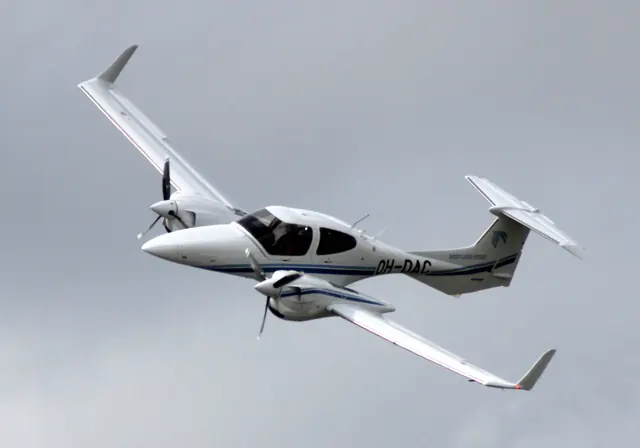
Diamond DA42 Twin Star · Aerobask · X-Plane 12
An NG with customised engine and avionics displays
Aerobask identifies its DA42 as the Austro-powered NG for X-Plane 12. The package enhances Laminar’s G1000 with engine indications, annunciations, touchscreen functions and OscarPilote’s synthetic vision. It also includes a custom MD302 standby attitude module.
Gathered Aerobask DA42 page · package revision not stated
Diamond DA42 Twin Star
The DA42 was Diamond's first twin-engine aircraft design. It introduced a new European light twin to a class that had seen few new designs for decades. A diesel-powered example crossed the North Atlantic without a stop in 2004. Engine and avionics configurations vary; the specification table identifies its model.
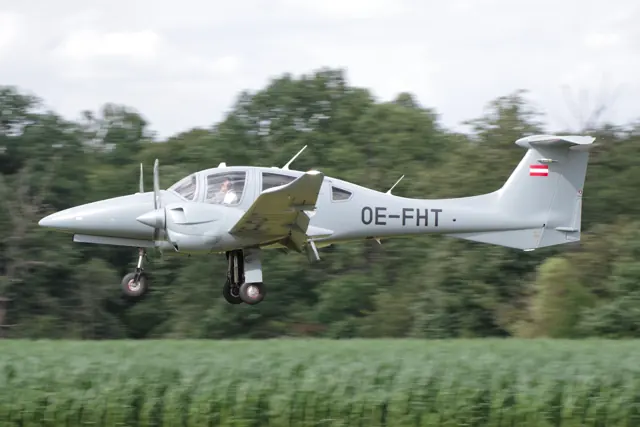
Diamond DA62
The DA62 expanded Diamond's touring-aircraft range with a larger twin-engine cabin. Its long wing, slim engine nacelles and retractable landing gear follow the company's composite-airframe design language. Cabin seating depends on configuration, with arrangements extending beyond a conventional four-seat light aircraft.
Engine management and integrated avionics are central to the type's identity. The simulator products describe their own engine controls and cockpit functions.
Aircraft / family
Do X · Microsoft Flight Simulator · MSFS 2020
Radio navigation has its own crew station
The radio room contains the avionics master, NAV heading selectors, ADF controls and separate NAV frequency adjustments. Its illustrated panels supplement the cockpit instruments.
MSFS 2020 guide · PDF pages 30–34
DC-3C Airliner · VSKYLABS · X-Plane 12
Released product and variants
The DC-3C is a modernised civilian development based on a C-47A. VSKYLABS equips it with G1000-based avionics, a matching autopilot and a passenger cabin; the military C-47B is sold separately.
Official developer / designated-store reference · checked 2026-09-14
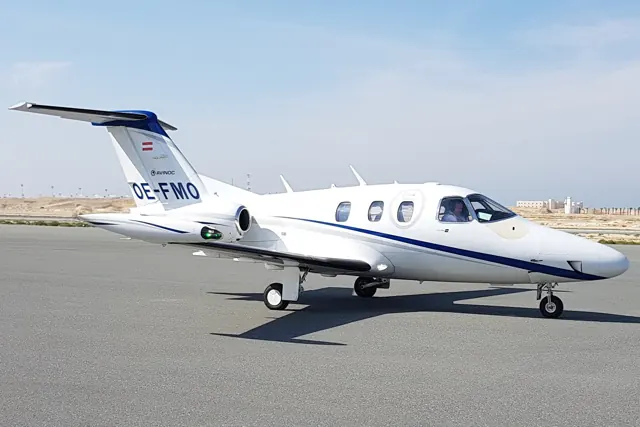
Eclipse 550 · Aerobask · X-Plane 11
The 550 NG uses Aerobask’s chosen avionics
Aerobask explicitly describes equipping its Eclipse 550 NG with custom Dynon SkyView and Garmin GTN750/650 simulations. This is the developer’s selected cockpit arrangement. The documented package targets X-Plane 11 and includes separate manuals for the aircraft and its avionics.
Gathered Aerobask Eclipse page
Eclipse 550
The 550 continued the Eclipse 500 design under Eclipse Aerospace and later One Aviation. It retains the compact, low-wing, twin-engine configuration and six-seat cabin arrangement of that lineage. The real aircraft was certified for single-pilot operation. The simulator listings identify each developer's avionics and supported versions.
Optica · Microsoft Flight Simulator · MSFS 2024
The documented navigator is the Working Title GNS530
The manual pairs the Working Title GNS530 with the KAP140. GTN750 support depends on a separate third-party replacement package; its description is not evidence that one is installed.
Got Friends / Microsoft Optica manual v3, avionics section
Optica · Microsoft Flight Simulator · MSFS 2024
Move the camera screen and adjust its image separately
Drag the camera display to reposition it. Its buttons adjust contrast, while the main panel’s Avionics Brightness knob controls brightness.
Manual v3, camera display controls
Edgley EA-7 Optica
John Edgley's Optica was conceived for low-speed observation work. The crew sit ahead of a ducted propeller in an unusually rounded, extensively glazed cabin. Twin tail booms leave the centreline clear behind the fan, giving the aircraft a silhouette quite unlike a conventional light single.
Its layout reflects the job: visibility and loitering were central design priorities. The Microsoft/Got Friends simulation represents the Series 300/301, with its avionics and loading features described in the developer documentation.
Aircraft / family
E-Jets Series · FlightSim Studio / X-Crafts · MSFS 2020 · MSFS 2024
Use documentation for the correct simulator edition
X-Crafts says the MSFS E-Jets share its 3D visuals with the X-Plane aircraft, while different teams develop the products. Flightsim Studio is responsible for the MSFS systems, FMS, avionics, flight model, tablet and sound, so the X-Plane manual does not establish those features for MSFS.
X-Crafts MSFS partnership and support description · gathered September 2026