X-Plane
Grumman F-14 Tomcat ↗
A two-seat naval fighter with variable-sweep wings and a cockpit built around pilot and radar-intercept officer roles.
1 implementations+ Compare
Explore the aircraft. Find your simulator. Follow the sources.
A two-seat naval fighter with variable-sweep wings and a cockpit built around pilot and radar-intercept officer roles.
A single-engine turboprop workhorse for passenger services, freight and remote-area transport.
A lightweight short-field aircraft with a specialised wing and tall, shock-absorbing landing gear.
A twin-engine utility helicopter with roots in the BK 117 and EC145 families.
A two-seat composite kit aircraft developed from the Lancair 320.
A two-seat composite light-aircraft family with a high wing and a compact enclosed cabin.
A three-engine airliner that became a mainstay of Soviet and Russian passenger transport.
A pioneering light helicopter whose bubble cabin and exposed structure became widely recognisable.
An enlarged Velocity kit aircraft with a canard and rear-mounted pusher propeller.
The CJ4 belongs to Cessna's light-jet line, with two rear-mounted engines and a T-tail.
A family of single-aisle airliners built around sidesticks, electronic flight controls and a shared cockpit.
A two-seat training single with a high wing and fixed tricycle landing gear.
A small three-engine demonstrator created to explore technologies for a future supersonic airliner.
An open-cockpit biplane trainer that found a second life in civilian flying.
The Stationair utility family, combining a high wing with fixed landing gear.
A twin-engine business jet designed to retain some of the utility flexibility associated with the PC-12.
A two-seat light amphibian with a compact boat hull and a pusher propeller.
A twin-aisle Boeing designed alongside the 757's generation of two-pilot flight decks.
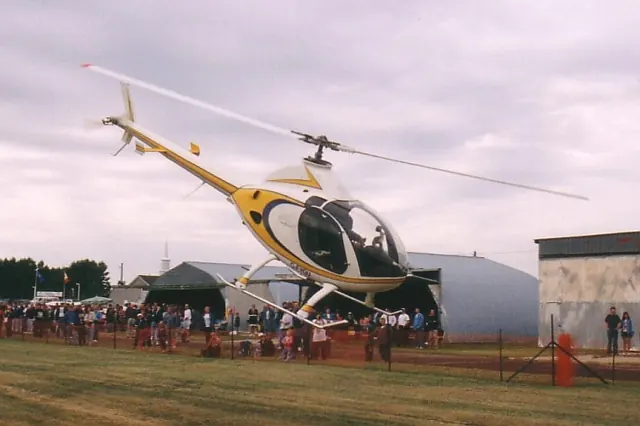
RotorWay's two-seat kit-helicopter family, with piston and turbine simulator interpretations.
A modern medium twin-engine helicopter developed as a successor to the Dauphin line.
A twin-turboprop family whose smaller conventional-tail and larger T-tail branches have distinct identities.
A military transport developed from the DC-3, used for cargo, troops, parachuting and glider towing.
A modern two-seat piston helicopter designed around the training role.
A cabin-class piston twin designed for commuter, cargo and utility work.
This is AirframeDB’s first release. More features and aircraft research are planned. Leave your email if you’d like occasional updates.