X-Plane
Boeing B-52G Stratofortress ↗
A long-range strategic bomber with a swept wing and eight jet engines in paired pods.
1 implementations+ Compare
Explore the aircraft. Find your simulator. Follow the sources.
A long-range strategic bomber with a swept wing and eight jet engines in paired pods.
A heavy transport helicopter whose two large rotors remove the need for a tail rotor.
A 1920s flying boat with two engines arranged in tandem above the wing.
A shorter wide-body Airbus from the transition to two-pilot, electronic-instrument cockpits.
A small three-engine demonstrator created to explore technologies for a future supersonic airliner.
Avro's delta-wing bomber, developed for Britain's postwar strategic force.
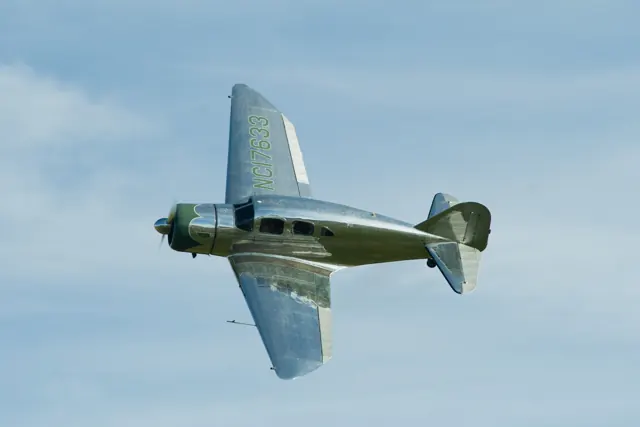
A late-1930s cabin aircraft with metal construction and retractable landing gear.
A turbine-powered utility helicopter with a broad cabin and a long international service history.
A box-shaped utility twin whose cabin and rear access are central to its design.
A two-seat composite light-aircraft family with a high wing and a compact enclosed cabin.
A twin-aisle Boeing designed alongside the 757's generation of two-pilot flight decks.
Cessna's retractable-gear Centurion, a high-wing touring aircraft.
A large long-haul twin that introduced Boeing's first commercial fly-by-wire airliner flight controls.
A short-field Savage with leading-edge slats and a distinct Got Friends simulator implementation.
The second-generation Harrier, designed around vectored thrust and short-field operation.
A pioneering light helicopter whose bubble cabin and exposed structure became widely recognisable.
A small observation-helicopter family with a rounded cabin and compact rotor system.
A cabin biplane with the lower wing placed ahead of the upper one.
A First World War trainer that became a familiar sight in the barnstorming era.
The CJ4 belongs to Cessna's light-jet line, with two rear-mounted engines and a T-tail.
A low-wing piston twin that carries the Beechcraft touring-aircraft lineage into two-engine flying.
A swept-wing business jet designed around high subsonic cruise speed.
A compact aerobatic biplane family with both single-seat and tandem-seat branches.
The purpose-built Ryan monoplane used by Charles Lindbergh for his 1927 solo Atlantic crossing.
This is AirframeDB’s first release. More features and aircraft research are planned. Leave your email if you’d like occasional updates.