MSFS
Saab 17 B ↗
A Swedish reconnaissance and dive-bombing aircraft from the early 1940s.
1 implementations+ Compare
Explore the aircraft. Find your simulator. Follow the sources.
A Swedish reconnaissance and dive-bombing aircraft from the early 1940s.
A turbine-powered utility helicopter with a broad cabin and a long international service history.
A heavy transport helicopter whose two large rotors remove the need for a tail rotor.
A full-length double-deck airliner built for very high passenger capacity.
A long-haul twin whose family spans passenger, freight and specialist transport roles.
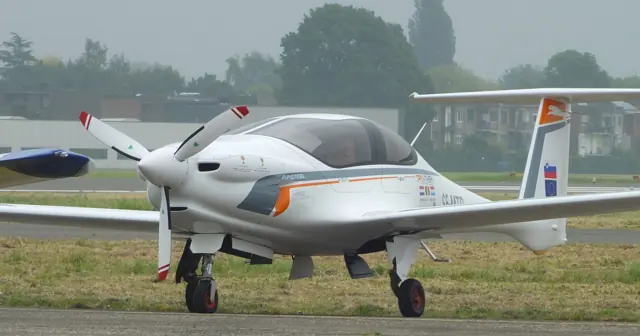
Pipistrel's streamlined four-seat composite-aircraft design.
A twin-engine business jet designed to retain some of the utility flexibility associated with the PC-12.
A fixed-wing observation aircraft with a helicopter-like view from its glazed nose.
A compact twin-engine helicopter widely used for medical, police and training work.
A compact rear-engined jet designed for short-haul regional airline work.
A hybrid-electric regional-airliner concept represented in the simulator while the real programme develops.
A four-engine jetliner that helped establish the shape of long-distance jet travel.
A short-haul jet family that evolved through several generations of engines, wings and flight decks.
A low-wing piston twin that carries the Beechcraft touring-aircraft lineage into two-engine flying.
A twin-turboprop utility aircraft developed by Reims Aviation with Cessna.
A British jet trainer with tandem seating and a long military training career.
A wartime fighter developed from the earlier Curtiss P-36.
A long-range twin whose programme emphasised composite construction and more electrically powered systems.
A twin-turbine Huey descendant with a four-blade main rotor.
The purpose-built Ryan monoplane used by Charles Lindbergh for his 1927 solo Atlantic crossing.
A low-wing agricultural Cessna with a cockpit and hopper arranged around the job.
A high-wing utility turboprop designed for short-field passenger and cargo work.
A purpose-built aerobatic monoplane family developed by pilot and designer Walter Extra.
The second-generation Harrier, designed around vectored thrust and short-field operation.
This is AirframeDB’s first release. More features and aircraft research are planned. Leave your email if you’d like occasional updates.