Find aircraft background, systems descriptions and manuals for the aircraft you are researching. Each note keeps its source and version context close by.
Simulator manuals describe the developer’s implementation. Aircraft background is research-based; pilot accounts describe an individual’s experience. Coverage here is limited to the selected notes and linked resources, not the full contents of every manual.
Draco X
The Polish PZL-104 Wilga was designed as a short-field utility aircraft, with a high wing, extensively glazed cabin and distinctive landing gear. It has served aeroclubs and utility operators in roles including towing and observation.
Mike Patey's DRACO was an extensively modified turbine-powered Wilga. DRACO X in Microsoft Flight Simulator is a separate Got Friends interpretation with its own equipment and features. The developer manual describes DRACO X's simulated equipment and features.
Aircraft / family
Patey, passengers unhurt in crash that destroyed DRACO
David Tulis and Julie Summers Walker · telephone interview and reported video remarks · 16 September 2019
Druine D.5 Turbi
Restauravia's D.5 Turbi recreates an aircraft co-owned by its developer. The package has a 60 hp engine, fixed tailwheel landing gear and no modelled flap detents. Pitch trim is available in the simulation; autopilot and autothrottle are not included.
Druine D.5 Turbi
H3 EasyFlyer / Sport · VSKYLABS · X-Plane 11 · X-Plane 12
Released product and variants
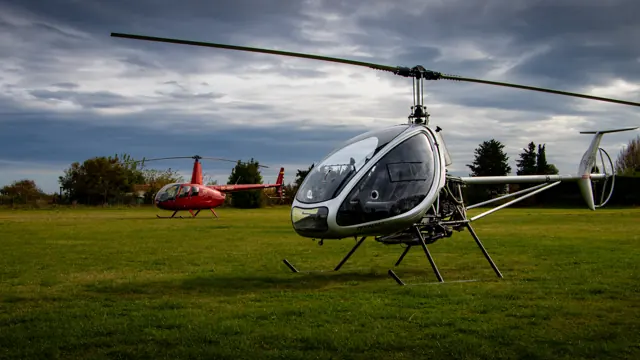
The package includes classic EasyFlyer and newer Sport variants of the Dynali H3. Both belong to the developer’s light-helicopter range for X-Plane.
Official developer / designated-store reference · checked 2026-09-14
Dynali H3
The Dynali H3 is a compact helicopter offered in ready-to-fly and kit forms. Its side-by-side cabin and conventional tail rotor give it the familiar arrangement of a utility helicopter at a smaller scale.
VSKYLABS includes the classic EasyFlyer and newer Sport versions. Its X-Plane product uses native aircraft systems and supports interaction from a VR cockpit as well as a conventional screen.
Dynali H3 Sport 135 hp configuration
ERCO Ercoupe 415-C
Fred Weick’s Ercoupe pursued a mid-1930s goal of making a small aircraft easier to fly. The Smithsonian describes a two-seat low-wing design with tricycle landing gear, twin fins and a deliberately coordinated two-control system. The first production 415-C in its collection was built in October 1939.
The wheel commands pitch and links the ailerons, rudders and nosewheel for steering in flight and on the ground. The original arrangement dispenses with rudder pedals. Differential aileron travel counters adverse yaw, while limited elevator travel contributes to the aircraft’s stall and spin behaviour. Later Ercoupes could have a rudder bar fitted, so the two-control arrangement is an identified configuration rather than a universal feature of every descendant.
Smithsonian pre-war 415-C, not later heavier or re-engined versions.
EagleLabs Eagle 315 HP Twin Prototype · EagleLabs · X-Plane 11 · X-Plane 12
A simulator twin's systems
The product lists a custom S-TEC autopilot and 24 independently simulated fuses with failure behaviour. Black and white cockpit styles provide alternative presentations of the same design. The manual is supplied with the purchase.
Features and v2.1 requirements
EagleLabs Eagle 315 HP Twin Prototype · EagleLabs · X-Plane 11 · X-Plane 12
The earlier and later Eagle designs
The author's description identifies counter-rotating 160 hp engines and constant-speed propellers with retractable landing gear. The improved 2024 store model is a development of the free 2019 design; the versions have separate histories.
Author specifications and storev2.1 changes
EagleLabs Eagle 315 HP Twin Prototype · EagleLabs · X-Plane 11 · X-Plane 12
The v2.1 flying-control revision
The June 6, 2024 v2.1 notes describe differential ailerons to reduce adverse yaw and wingtip vortex generators intended to delay aileron stall. Elevator effectiveness, trim precision, centre of gravity and low-speed stability were also revised.
Features and v2.1 requirements
EagleLabs Eagle 315 HP Twin Prototype
EagleLabs' Eagle 315 is a retro-style general-aviation design created for X-Plane. Its published specifications list two 160 hp engines, with counter-rotating constant-speed propellers and retractable landing gear.
The paid product develops an earlier freeware design. Its custom S-TEC autopilot, 24 separately simulated fuses and failure options accompany alternative black and white cockpit styles.
EagleLabs Eagle 315 HP Twin Prototype
Eclipse 550 · Aerobask · X-Plane 11
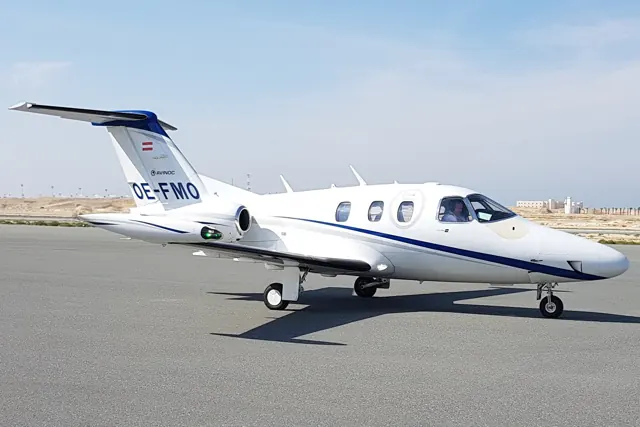
The 550 NG uses Aerobask’s chosen avionics
Aerobask explicitly describes equipping its Eclipse 550 NG with custom Dynon SkyView and Garmin GTN750/650 simulations. This is the developer’s selected cockpit arrangement. The documented package targets X-Plane 11 and includes separate manuals for the aircraft and its avionics.
Gathered Aerobask Eclipse page
Eclipse 550 · Aerobask · X-Plane 11
Cabin controls and loading accompany the flight deck
The VIP touchscreen controller operates in the cabin and as a popup, while passengers and luggage can be configured. Cockpit instruments also have popup displays and mouse-scroll support. Aerobask lists FMOD sound from version 1.1.0, weather effects on the windshield and interiors that vary with the chosen livery.
Published XP11 feature list; no XP12 compatibility inferred