X-Plane
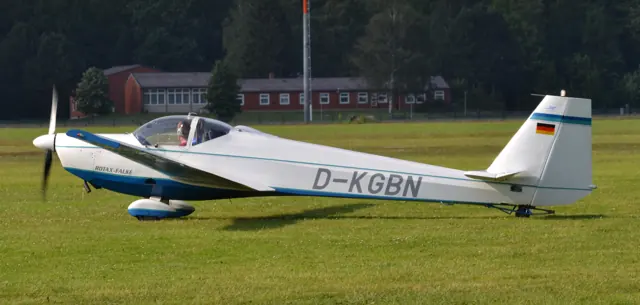
Scheibe SF-25 Falke ↗
A side-by-side touring motorglider used for both powered flying and soaring.
1 implementations+ Compare
Explore the aircraft. Find your simulator. Follow the sources.
A side-by-side touring motorglider used for both powered flying and soaring.
A modern open-cockpit light aircraft that revives the corrugated-metal style of the 1929 A50.
The four-engine Flying Fortress, a major American bomber of the Second World War.
A composite two-seat light sport aircraft with an unobstructed cantilever high wing.
A light tandem-seat taildragger built around the familiar braced high-wing layout.
The second-generation Harrier, designed around vectored thrust and short-field operation.
A First World War trainer that became a familiar sight in the barnstorming era.
A powered hang-glider wing above an amphibious inflatable boat.
A composite, low-wing touring single with fixed gear and a turbocharged engine.
Grumman’s small twin-engine amphibian: a flying boat with retractable wheels and a life spanning wartime service, private travel and seaplane training.
Ted Smith's piston twin, later produced by Piper as the Aerostar.
A four-engine tactical transport built around a rear loading ramp and access to austere airfields.
A modern composite twin with a roomy cabin and two wing-mounted piston engines.
A carbon-fibre aerobatic monoplane family with a dedicated air-racing branch.
A pressurised regional airliner with a high wing and two Rolls-Royce Dart turboprops.
A four-seat high-wing single that spans generations of conventional instruments and glass cockpits.
A twin-turboprop utility aircraft developed by Reims Aviation with Cessna.
A side-by-side military trainer with a low wing and fixed tricycle landing gear.
A twin-turboprop family whose smaller conventional-tail and larger T-tail branches have distinct identities.
A Swedish reconnaissance and dive-bombing aircraft from the early 1940s.
A single-engine turboprop workhorse for passenger services, freight and remote-area transport.
A long-running touring single, familiar in both V-tail and conventional-tail forms.
A four-abreast regional-jet family spanning the E170, E175, E190 and E195.
A two-seat composite kit aircraft developed from the Lancair 320.
New aircraft, useful sources and improvements to AirframeDB. Occasional updates, when there’s something to share.





































