X-Plane
PZL-104 Wilga ↗
A Polish utility aircraft designed for short takeoffs and landings.
1 implementations+ Compare
Explore the aircraft. Find your simulator. Follow the sources.
A Polish utility aircraft designed for short takeoffs and landings.
A late-war single-seat jet fighter with its engine mounted above the fuselage.
A tandem two-seat sailplane family used for training and cross-country soaring.
A First World War trainer that became a familiar sight in the barnstorming era.
A two-seat Tecnam high-wing aircraft combining composite and metal construction.
A carbon-fibre aerobatic monoplane family with a dedicated air-racing branch.
A midsize business jet developed by Bombardier’s Learjet division.
A four-seat piston helicopter with a two-blade main rotor and conventional tail rotor.
The four-engine Flying Fortress, a major American bomber of the Second World War.
The Model 525 CitationJet, the starting point of Cessna's CJ and M2 lineage.
A carrier-capable multirole fighter, larger than the earlier Hornet from which it developed.
A shorter wide-body Airbus from the transition to two-pilot, electronic-instrument cockpits.
Mooney's four-seat piston family, developed through many touring-aircraft variants.
A pioneering light helicopter whose bubble cabin and exposed structure became widely recognisable.
A large twin-radial transport that carried heavy loads through wartime and post-war freight service.
A four-engine jetliner that helped establish the shape of long-distance jet travel.
A heavy-lift helicopter built around an open frame and an external working load.
Lockheed's wide-body TriStar, with three RB211 engines and a distinctive tail intake.
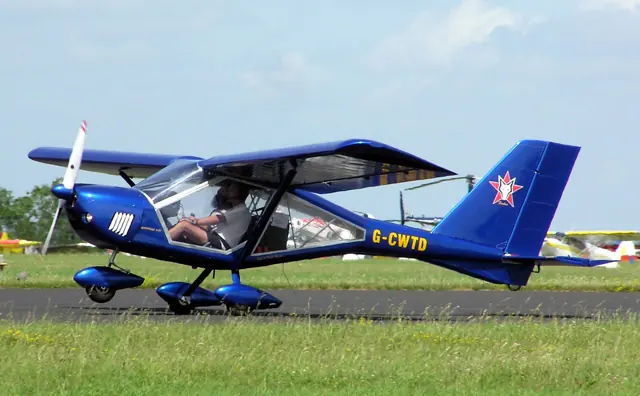
A high-wing light sport aircraft with a broad glazed cabin and tricycle landing gear.
A simulator-designed very light jet using the Citation Mustang as a reference.
A slender supersonic trainer with tandem seats and two small afterburning turbojets.
Pipistrel's streamlined four-seat composite-aircraft design.
A corrugated-metal transport best known in its three-engine form.
A wooden touring-aircraft family recognisable by the upward-angled outer wing panels.
New aircraft, useful sources and improvements to AirframeDB. Occasional updates, when there’s something to share.