MSFS
Nieuport 24 / 24bis ↗
A late member of the Nieuport V-strut scout family, remembered both as a First World War fighter and as an advanced trainer.
2 implementations+ Compare
Explore the aircraft. Find your simulator. Follow the sources.
A late member of the Nieuport V-strut scout family, remembered both as a First World War fighter and as an advanced trainer.
Piper's two-seat trainer with fixed tricycle landing gear.
A compact racing aeroplane built around a large radial engine and very short fuselage.
The retractable member of Beechcraft’s Musketeer family: a roomy, four-cylinder travelling aircraft with an unusually large baggage door.
Grumman’s small twin-engine amphibian: a flying boat with retractable wheels and a life spanning wartime service, private travel and seaplane training.
A late-war single-seat jet fighter with its engine mounted above the fuselage.
A stretched development of the DC-9 with rear-mounted engines and a five-abreast cabin.
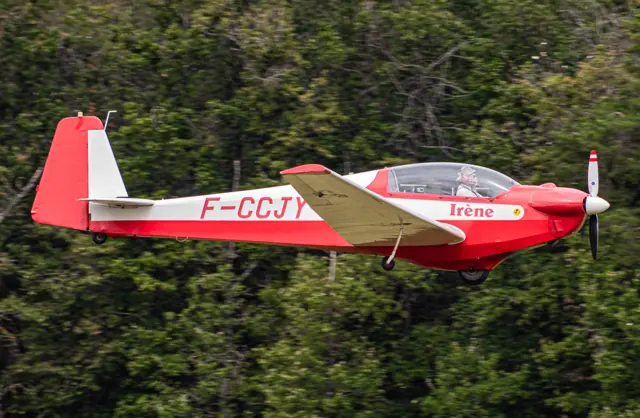
A tandem-seat development of Scheibe’s touring motorglider family.
A streamlined light twin helicopter, with the later Bell 230 in the same family.
A twin-engine business jet designed to retain some of the utility flexibility associated with the PC-12.
A First World War trainer that became a familiar sight in the barnstorming era.
Tecnam's two-seat, low-wing Sierra, introduced in the early 2000s.
A medium commercial helicopter designed for passenger and utility transport.
A long-range fighter whose different engine and canopy developments produced several distinct forms.
The second-generation Harrier, designed around vectored thrust and short-field operation.
A Hungarian two-seat light helicopter powered by a Rotax 915 iS.
A pressurised touring twin whose piston and turbine-conversion versions make a particularly interesting comparison.
A jet-powered military transport designed for both strategic loads and tactical airfield access.
A family of single-aisle airliners built around sidesticks, electronic flight controls and a shared cockpit.
A regional turboprop family whose short early versions and larger Q400 have different proportions and systems.
A shorter wide-body Airbus from the transition to two-pilot, electronic-instrument cockpits.
A 1920s transport family that developed from a single-engine airliner into a trimotor.
Cirrus's first type-certified aircraft, a composite piston single.
A regional jet family with four small engines, a high wing and a large split tail airbrake.
New aircraft, useful sources and improvements to AirframeDB. Occasional updates, when there’s something to share.