Find aircraft background, systems descriptions and manuals for the aircraft you are researching. Each note keeps its source and version context close by.
Simulator manuals describe the developer’s implementation. Aircraft background is research-based; pilot accounts describe an individual’s experience. Coverage here is limited to the selected notes and linked resources, not the full contents of every manual.
DC-6 · PMDG · MSFS 2020 · MSFS 2024
A cockpit based on an individual aircraft
PMDG's introduction identifies V5-NCG as the aircraft surveyed for its DC-6. The team's photographs, audio and video informed the simulated interior. Different engine-gauge faces, unusual lighting labels and even misspelled placards were retained from that aircraft. Those details reproduce the surveyed V5-NCG cockpit.
PMDG DC-6 Pilot Introduction, June 2021; archived version and its documented assistant limits · PDF pp.5,12
DC-6 · PMDG · MSFS 2020 · MSFS 2024
Understanding the automated flight engineer
The automated flight engineer maintains its selected phase, so it can override manual power, mixture or carburettor-air adjustments. The June 2021 guide describes Abort as the return to manual systems management. It also separates the assistant's responsibilities from the pilot's: the documented version does not operate the autopilot or start the engines. Its cruise setup is a chosen compromise among several settings in the handbook.
PMDG DC-6 Pilot Introduction, June 2021; archived version and its documented assistant limits · PDF pp.12–14
Douglas DC-6
Douglas developed the DC-6 from wartime transport work into a long-range commercial competitor. Its four radial engines and pressurised cabin supported passenger and freight operations. Production ran from the 1940s into the late 1950s, with later careers extending into specialist cargo and firefighting work.
The flight engineer is a major part of the aircraft's cockpit organisation. PMDG's simulation makes that role accessible through its own interface while retaining period systems such as the Sperry autopilot. The manual explains how those responsibilities are divided in the virtual aircraft.
Aircraft / family
Druine D.5 Turbi
Restauravia's D.5 Turbi recreates an aircraft co-owned by its developer. The package has a 60 hp engine, fixed tailwheel landing gear and no modelled flap detents. Pitch trim is available in the simulation; autopilot and autothrottle are not included.
Druine D.5 Turbi
ERCO Ercoupe 415-C
Fred Weick’s Ercoupe pursued a mid-1930s goal of making a small aircraft easier to fly. The Smithsonian describes a two-seat low-wing design with tricycle landing gear, twin fins and a deliberately coordinated two-control system. The first production 415-C in its collection was built in October 1939.
The wheel commands pitch and links the ailerons, rudders and nosewheel for steering in flight and on the ground. The original arrangement dispenses with rudder pedals. Differential aileron travel counters adverse yaw, while limited elevator travel contributes to the aircraft’s stall and spin behaviour. Later Ercoupes could have a rudder bar fitted, so the two-control arrangement is an identified configuration rather than a universal feature of every descendant.
Smithsonian pre-war 415-C, not later heavier or re-engined versions.
EagleLabs Eagle 315 HP Twin Prototype · EagleLabs · X-Plane 11 · X-Plane 12
The earlier and later Eagle designs
The author's description identifies counter-rotating 160 hp engines and constant-speed propellers with retractable landing gear. The improved 2024 store model is a development of the free 2019 design; the versions have separate histories.
Author specifications and storev2.1 changes
EagleLabs Eagle 315 HP Twin Prototype
EagleLabs' Eagle 315 is a retro-style general-aviation design created for X-Plane. Its published specifications list two 160 hp engines, with counter-rotating constant-speed propellers and retractable landing gear.
The paid product develops an earlier freeware design. Its custom S-TEC autopilot, 24 separately simulated fuses and failure options accompany alternative black and white cockpit styles.
EagleLabs Eagle 315 HP Twin Prototype
Eclipse 550
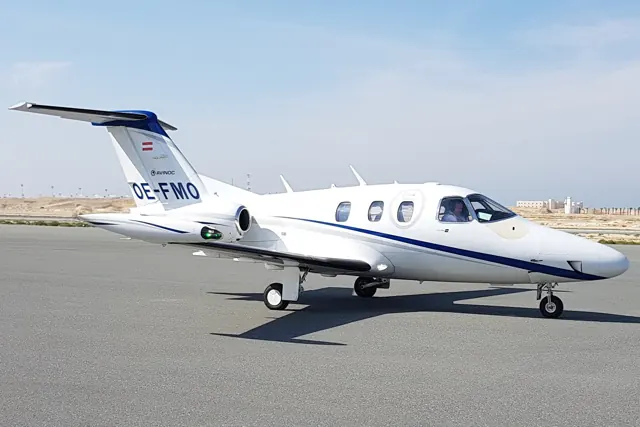
The 550 continued the Eclipse 500 design under Eclipse Aerospace and later One Aviation. It retains the compact, low-wing, twin-engine configuration and six-seat cabin arrangement of that lineage. The real aircraft was certified for single-pilot operation. The simulator listings identify each developer's avionics and supported versions.
Embraer E-Jets
Embraer developed the original E-Jets around regional and shorter mainline airline routes. Two underwing engines and a conventional tail surround a cabin wider than the company's earlier narrow regional jets. Different fuselage lengths serve different passenger capacities.
The original family is distinct from the later E2 programme. X-Crafts's documentation also separates airframe variants, avionics options and the Lineage business-aircraft development. Each simulator product identifies its included variants and equipment.
Aircraft / family
Embraer Phenom 100
The Phenom 100 is the EMB-500 light business jet. The NTSB’s description of the original model identifies two Pratt & Whitney Canada PW617F-E engines and a Garmin-based automatic-flight installation. Its cockpit includes a stall-warning and protection system with AoA sensors, a warning computer and an actuator connected to the elevator control system.
The protection system provides aural warning, low-speed awareness indications and a stick-pusher action. Its thresholds change with the aircraft’s ice-protection configuration.
Original EMB-500 N100EQ as documented by the NTSB; not later Phenom 100EV/EX.
Phenom 300 · Aerobask · X-Plane 12
An enhanced G1000 with clearly identified simulator conveniences
Aerobask extends Laminar’s G1000 with synthetic vision, custom alerts, engine displays and selectable units. The developer explicitly calls the buttons used to access electrical, anti-ice, fuel and status diagrams fictional. Optional input aids and detachable windows support different simulator setups. This cockpit should not be confused with the later real-world G3000-equipped 300E.
Gathered Aerobask XP12 page; same work as the catalogue source without www
Embraer Phenom 300
Embraer developed the Phenom 300 after identifying demand for a larger aircraft than the Phenom 100. It received a new airframe, more powerful engines, winglets and spoilers. It is certificated for single-pilot operation.
Aerobask's X-Plane aircraft combines a G1000-based cockpit with custom engine and system features. The developer documents its FADEC, cruise-speed control and the different jobs performed by the spoilers.
Aircraft / family