MSFS
Fairchild Republic A-10 Thunderbolt II ↗
A close-air-support aircraft with a straight wing, twin tail and two widely separated jet engines.
1 implementations+ Compare
Explore the aircraft. Find your simulator. Follow the sources.
A close-air-support aircraft with a straight wing, twin tail and two widely separated jet engines.
Dassault's long-range Falcon 8X, developed from the three-engine 7X.
Piper's two-seat trainer with fixed tricycle landing gear.
An open, single-seat ultralight with its propeller behind the pilot.
Two related Dutch regional jets developed from the F28 lineage.
A regional jet family with four small engines, a high wing and a large split tail airbrake.
A compact twin-engine helicopter widely used for medical, police and training work.
The turboprop-powered member of Beechcraft’s tandem-seat Mentor training family.
A box-shaped utility twin whose cabin and rear access are central to its design.
A four-engine airliner whose history also includes long-range maritime military service.
An experimental twin-boom racing aircraft commissioned by Bob Pond and designed by Burt Rutan.
A six-seat composite single turboprop with a pressurised cabin and retractable gear.
A small twin-engine amphibian that moved from business transport into military and utility service.
The purpose-built Ryan monoplane used by Charles Lindbergh for his 1927 solo Atlantic crossing.
An Italian light aircraft known for military training and aerobatic use.
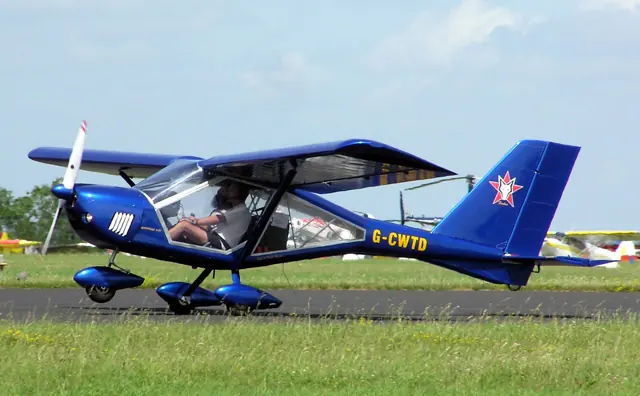
A high-wing light sport aircraft with a broad glazed cabin and tricycle landing gear.
A tandem-seat utility aircraft whose light structure and high wing suit bush, towing and recreational work.
Mooney's four-seat piston family, developed through many touring-aircraft variants.
A two-seat amphibian with a flying-boat hull and a pusher engine above the cabin.
A four-seat piston helicopter with a two-blade main rotor and conventional tail rotor.
The Mitchell medium bomber, named for aviation advocate Billy Mitchell.
A five-seat turbine helicopter developed from Robinson's smaller piston-helicopter line.
The Wilga is the real-aircraft starting point for Mike Patey's DRACO and the simulator's DRACO X.
A compact twin-engine transport helicopter with retractable gear and a long development history.
New aircraft, useful sources and improvements to AirframeDB. Occasional updates, when there’s something to share.