MSFS
Extra 330LT ↗
A purpose-built aerobatic monoplane family developed by pilot and designer Walter Extra.
2 implementations+ Compare
Explore the aircraft. Find your simulator. Follow the sources.
A purpose-built aerobatic monoplane family developed by pilot and designer Walter Extra.
Airbus's first production aircraft, built around a twin-engine wide-body layout.
A compact Australian wartime fighter built around a radial engine.
A composite amphibian that carries Dornier's centreline engine arrangement into the turboprop era.
A corrugated-metal transport best known in its three-engine form.
A push-pull twin with one engine at each end of the central fuselage.
A late member of the Nieuport V-strut scout family, remembered both as a First World War fighter and as an advanced trainer.
A four-engine airliner whose history also includes long-range maritime military service.
A pressurised twin turboprop with a canard, composite airframe and rear-facing propellers.
A carbon-fibre aerobatic monoplane family with a dedicated air-racing branch.
An experimental twin-boom racing aircraft commissioned by Bob Pond and designed by Burt Rutan.
A vast inter-war flying boat with twelve engines arranged in six paired installations.
A low-wing agricultural Cessna with a cockpit and hopper arranged around the job.
A heavy-lift helicopter built around an open frame and an external working load.
A DC-10-derived tanker that combined aerial refuelling with passenger and cargo transport.
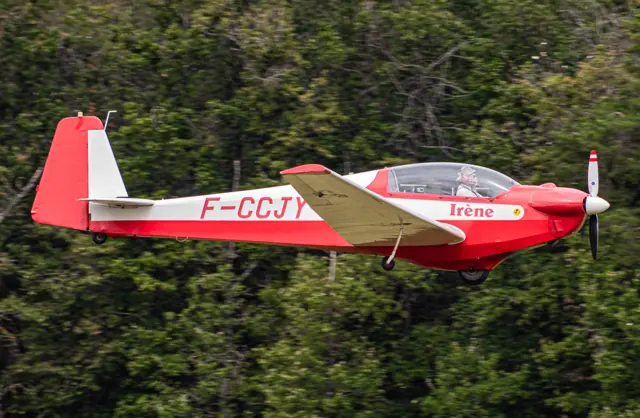
A tandem-seat development of Scheibe’s touring motorglider family.
A powered hang-glider wing above an amphibious inflatable boat.
A four-seat touring family whose Commander 114 added a larger engine and further refinements.
Mooney's four-seat piston family, developed through many touring-aircraft variants.
The purpose-built Ryan monoplane used by Charles Lindbergh for his 1927 solo Atlantic crossing.
A four-seat piston helicopter with a two-blade main rotor and conventional tail rotor.
RotorWay's two-seat kit-helicopter family, with piston and turbine simulator interpretations.
A long-range twin designed around a new wide-body airframe and extensive composite construction.
The second-generation Harrier, designed around vectored thrust and short-field operation.
New aircraft, useful sources and improvements to AirframeDB. Occasional updates, when there’s something to share.