X-Plane
Heinkel He 162 ↗
A late-war single-seat jet fighter with its engine mounted above the fuselage.
1 implementations+ Compare
Explore the aircraft. Find your simulator. Follow the sources.
A late-war single-seat jet fighter with its engine mounted above the fuselage.
A modern open-cockpit light aircraft that revives the corrugated-metal style of the 1929 A50.
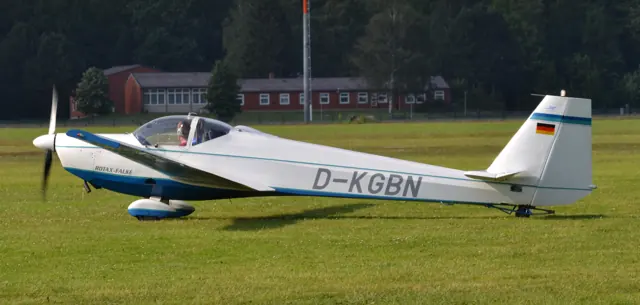
A side-by-side touring motorglider used for both powered flying and soaring.
A radial-engined utility aircraft closely associated with bush flying and float operations.
The tip-tanked turbofan Learjets, combining the classic compact airframe with longer range and careers in business, military and medical flying.
Japan’s postwar regional turboprop, with Rolls-Royce Dart power and a career spanning passenger, freight and specialist government flying.
Lockheed's wide-body TriStar, with three RB211 engines and a distinctive tail intake.
A streamlined light twin helicopter, with the later Bell 230 in the same family.
A wartime fighter developed from the earlier Curtiss P-36.
A shorter wide-body Airbus from the transition to two-pilot, electronic-instrument cockpits.
A streamlined twin-engine helicopter with a Fenestron tail rotor and retractable landing gear.
A four-seat piston helicopter with a two-blade main rotor and conventional tail rotor.
A three-engine airliner that became a mainstay of Soviet and Russian passenger transport.
A twin-turbine Huey descendant with a four-blade main rotor.
An enclosed, two-seat autogyro with side-by-side seating and a pusher propeller.
A compact twin-engine helicopter widely used for medical, police and training work.
A British utility twin built around short regional and practical transport work.
A light business jet with a swept wing, rear-mounted engines and an integrated flight deck.
A stretched development of the DC-9 with rear-mounted engines and a five-abreast cabin.
A slender supersonic trainer with tandem seats and two small afterburning turbojets.
SOCATA's touring-aircraft family, including the Tobago and Trinidad.
A two-seat composite trainer with a low wing and a large canopy.
A corrugated-metal, three-engine transport from the formative years of airline travel.
The purpose-built Ryan monoplane used by Charles Lindbergh for his 1927 solo Atlantic crossing.
New aircraft, useful sources and improvements to AirframeDB. Occasional updates, when there’s something to share.