MSFS X-Plane
Lancair Legacy ↗
A two-seat composite kit aircraft developed from the Lancair 320.
2 implementations+ Compare
Explore the aircraft. Find your simulator. Follow the sources.
A two-seat composite kit aircraft developed from the Lancair 320.
A four-bladed utility helicopter developed from the LongRanger lineage.
Japan’s postwar regional turboprop, with Rolls-Royce Dart power and a career spanning passenger, freight and specialist government flying.
A streamlined twin-engine helicopter with a Fenestron tail rotor and retractable landing gear.
A carbon-fibre aerobatic monoplane family with a dedicated air-racing branch.
A French two-seat aerobatic trainer with side-by-side seating and a distinctive curved wing outline.
A long-running touring single, familiar in both V-tail and conventional-tail forms.
A five-seat composite single whose development led to the diesel DA50 RG.
A twin-radial military transport with a rear ramp and short-field design priorities.
A super-midsize business jet with a swept wing, rear-mounted engines and an integrated glass cockpit.
A twin-aisle Boeing designed alongside the 757's generation of two-pilot flight decks.
A small three-engine demonstrator created to explore technologies for a future supersonic airliner.
A heavy transport helicopter whose two large rotors remove the need for a tail rotor.
The JetRanger and LongRanger family: a familiar turbine-helicopter shape with distinct cabin lengths.
A high-wing utility aircraft known for short-field work and a broad choice of working configurations.
Diamond's four-seat light twin, developed with diesel-powered versions.
SOCATA's touring-aircraft family, including the Tobago and Trinidad.
A late member of the Nieuport V-strut scout family, remembered both as a First World War fighter and as an advanced trainer.
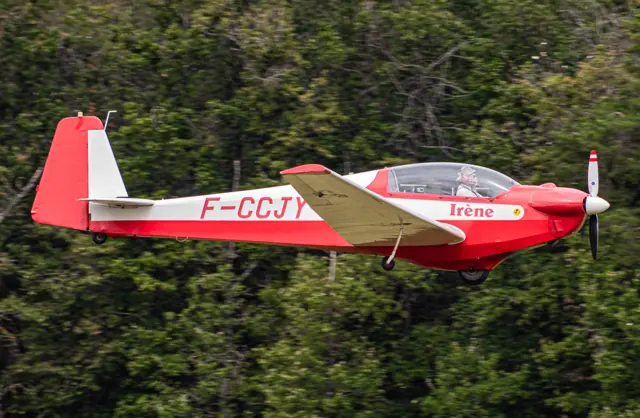
A tandem-seat development of Scheibe’s touring motorglider family.
A four-abreast regional-jet family spanning the E170, E175, E190 and E195.
A twin-turboprop family whose smaller conventional-tail and larger T-tail branches have distinct identities.
A single-seat helicopter originally developed as a homebuilt kit.
A stretched development of the DC-9 with rear-mounted engines and a five-abreast cabin.
A shorter wide-body Airbus from the transition to two-pilot, electronic-instrument cockpits.
New aircraft, useful sources and improvements to AirframeDB. Occasional updates, when there’s something to share.